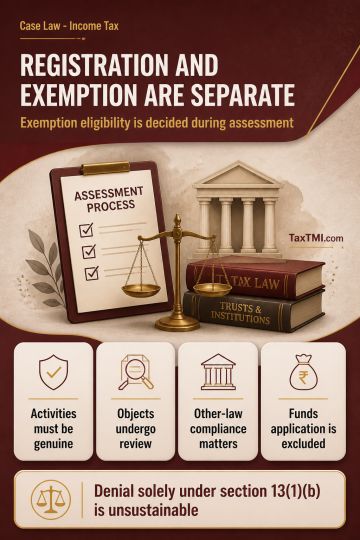
Defined public benefit can retain charitable character; registration renewal requires examining genuine activities and legal compliance, not surplus a...
Capital reduction is distinct from share buy-back, preventing buy-back tax; restructuring interest and related business deductions also survive scruti...
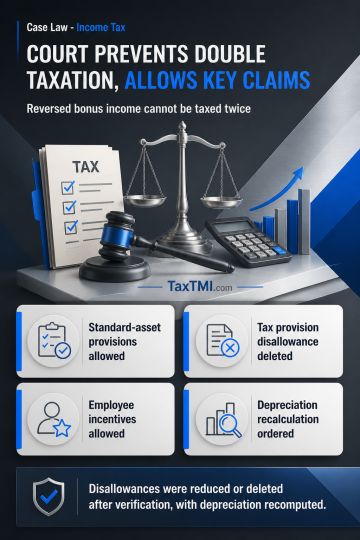
Transfer pricing and tax deductions upheld on established principles, while employee contributions and warranty provisions returned for fresh examinat...
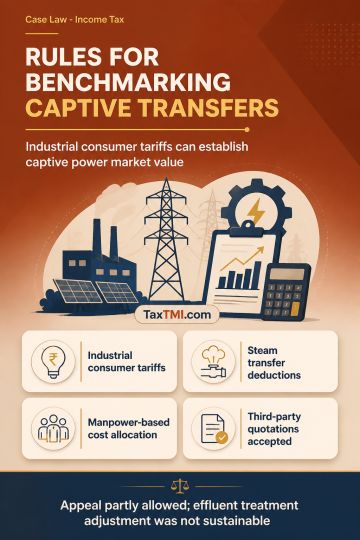
Captive transfer pricing relies on industrial consumer tariffs, while genuine quotations can benchmark effluent treatment transfers under the Other Me...
Specific tariff classification for ophthalmic instruments and extended limitation principles determine the treatment of duty demands, confiscation, an...
Page of 4801
Press 'Enter' after typing page number.
1161 to 1180 of 96001 Results
❮
❯
❯❯
0 / 200
Expand Note
Add to Folder
No Folders have been created
+
Are you sure you want to delete "My most important" ?
Proviso to Rule 22(4) empowers an authorized officer to drop cancellation proceedings and pass Form GST REG 20 where a person served with a show cause notice under Section 29(2)(c) furnishes all pending returns and pays tax dues, interest and late fee; on compliance the officer may also consider restoration of registration and must decide in accordance with law. The period for limitation under Section 73(10) is to be computed from the date of the court order for relevant years, while the specified forthcoming financial year is to be governed by Section 44; petitioners remain liable for arrears including tax, penalty, interest and late fees.
Proviso to Rule 22(4) empowers an authorized officer to drop cancellation proceedings and pass Form GST REG 20 where a person served with a show cause notice under Section 29(2)(c) furnishes all pending returns and pays tax dues, interest and late fee; on compliance the officer may also consider restoration of registration and must decide in accordance with law. The period for limitation under Section 73(10) is to be computed from the date of the court order for relevant years, while the specified forthcoming financial year is to be governed by Section 44; petitioners remain liable for arrears including tax, penalty, interest and late fees.
Note: It is a system-generated summary and is for quick reference only.
 TaxTMI
 of 4801













 Join Channel


 TaxTMI