Jurisdictional facts in certificate-of-origin discrepancies can support customs show-cause proceedings, leaving factual explanations for departmental ...
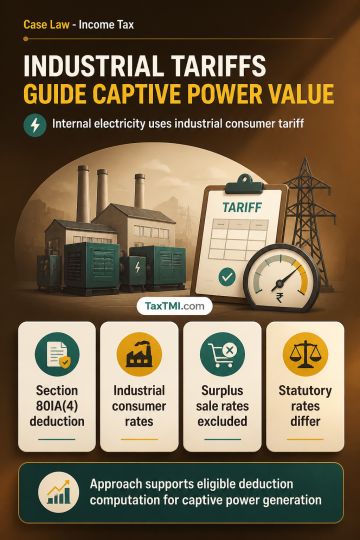
Market value for captive electricity consumption follows industrial consumer tariffs, supporting profit computation for the power generation deduction...
Classification of rubber rings for GST hinges on two operative conditions: they must be made of hard rubber and be suitable for use solely or principally with sprinkler or drip irrigation systems; if both conditions are met, the rings may be classified with irrigation machinery under the concessional tariff heading and attract the lower rate. If either condition is absent-rings are other than hard rubber or are articles of general use not confined to sole/principal use with those systems-then they fall outside that heading and are classifiable as other articles of vulcanised rubber, attracting the standard rate for that heading.
Classification of rubber rings for GST hinges on two operative conditions: they must be made of hard rubber and be suitable for use solely or principally with sprinkler or drip irrigation systems; if both conditions are met, the rings may be classified with irrigation machinery under the concessional tariff heading and attract the lower rate. If either condition is absent-rings are other than hard rubber or are articles of general use not confined to sole/principal use with those systems-then they fall outside that heading and are classifiable as other articles of vulcanised rubber, attracting the standard rate for that heading.
Note: It is a system-generated summary and is for quick reference only.
 TaxTMI
 of 4801










 Join Channel


 TaxTMI
