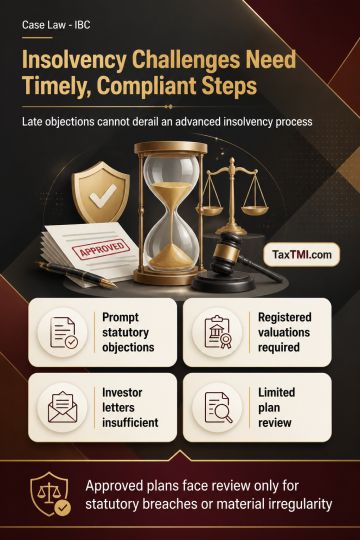
Clean slate principle extinguishes uncrystallised operational claims and bars continuation of pending recovery and arbitral proceedings after plan app...
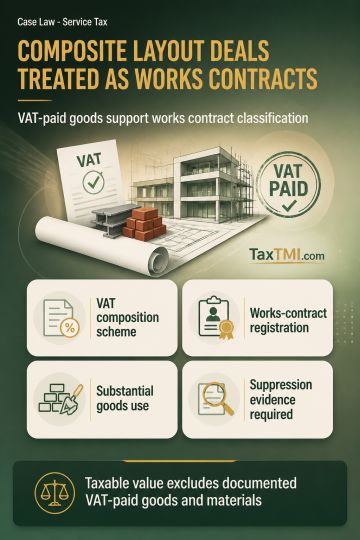
Works contract classification governs composite layout-development contracts where VAT-paid goods are transferred alongside construction and infrastru...
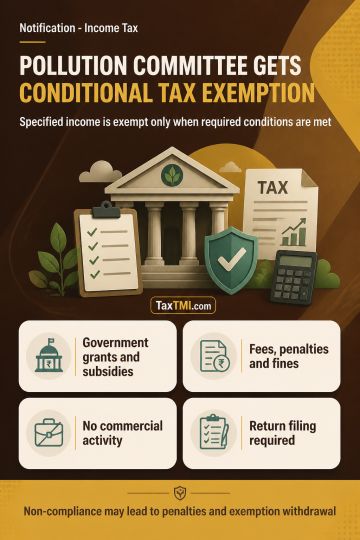
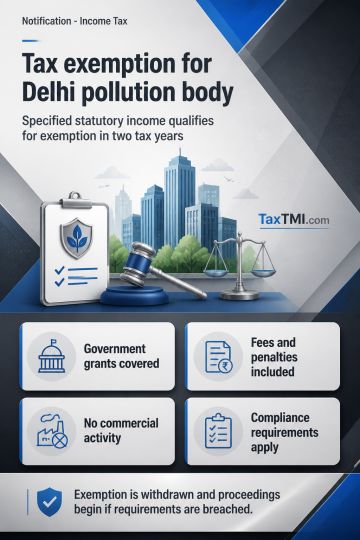
Specified income tax exemption for pollution control body remains conditional on non-commercial activity, unchanged income character, and return filin...
Classification of rubber rings for GST hinges on two operative conditions: they must be made of hard rubber and be suitable for use solely or principally with sprinkler or drip irrigation systems; if both conditions are met, the rings may be classified with irrigation machinery under the concessional tariff heading and attract the lower rate. If either condition is absent-rings are other than hard rubber or are articles of general use not confined to sole/principal use with those systems-then they fall outside that heading and are classifiable as other articles of vulcanised rubber, attracting the standard rate for that heading.
Classification of rubber rings for GST hinges on two operative conditions: they must be made of hard rubber and be suitable for use solely or principally with sprinkler or drip irrigation systems; if both conditions are met, the rings may be classified with irrigation machinery under the concessional tariff heading and attract the lower rate. If either condition is absent-rings are other than hard rubber or are articles of general use not confined to sole/principal use with those systems-then they fall outside that heading and are classifiable as other articles of vulcanised rubber, attracting the standard rate for that heading.
Note: It is a system-generated summary and is for quick reference only.
 TaxTMI
 of 4801









 Join Channel


 TaxTMI