Business expenditure deduction requires proof of genuine commission payments and commercial allowability; turnover growth alone cannot validate the cl...
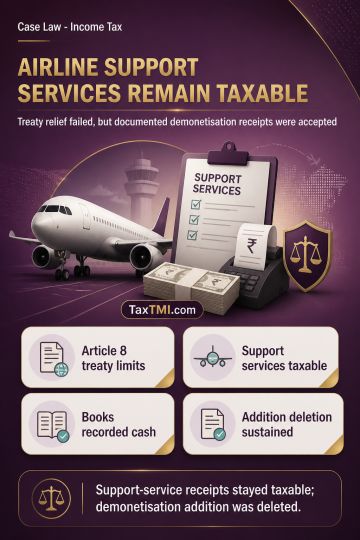
Article 8 treaty coverage excluded third-party airline support services, while documented demonetisation cash receipts remained accepted business inco...
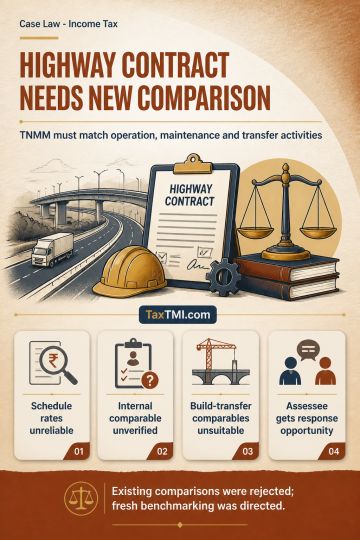
Functional comparability under TNMM requires highway contract benchmarks to reflect operation, maintenance and transfer activities, requiring fresh be...
Classification of rubber rings for GST hinges on two operative conditions: they must be made of hard rubber and be suitable for use solely or principally with sprinkler or drip irrigation systems; if both conditions are met, the rings may be classified with irrigation machinery under the concessional tariff heading and attract the lower rate. If either condition is absent-rings are other than hard rubber or are articles of general use not confined to sole/principal use with those systems-then they fall outside that heading and are classifiable as other articles of vulcanised rubber, attracting the standard rate for that heading.
Classification of rubber rings for GST hinges on two operative conditions: they must be made of hard rubber and be suitable for use solely or principally with sprinkler or drip irrigation systems; if both conditions are met, the rings may be classified with irrigation machinery under the concessional tariff heading and attract the lower rate. If either condition is absent-rings are other than hard rubber or are articles of general use not confined to sole/principal use with those systems-then they fall outside that heading and are classifiable as other articles of vulcanised rubber, attracting the standard rate for that heading.
Note: It is a system-generated summary and is for quick reference only.
 TaxTMI
 of 4792




 Join Channel


 TaxTMI
