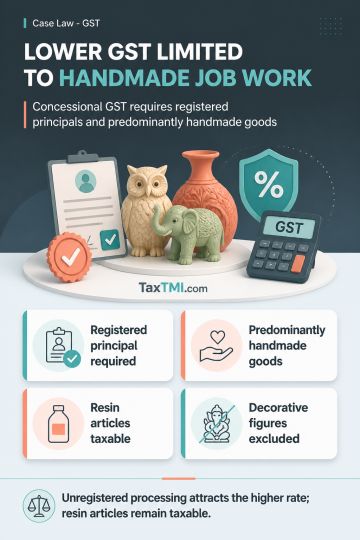
Handicraft job work receives concessional GST only for registered principals and predominantly handmade goods; commercial resin articles remain taxabl...
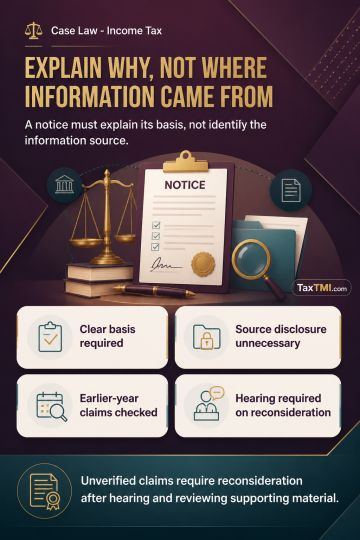
Reassessment disclosure requirements permit stated reasons without revealing information sources, but prior-taxation claims require full examination b...
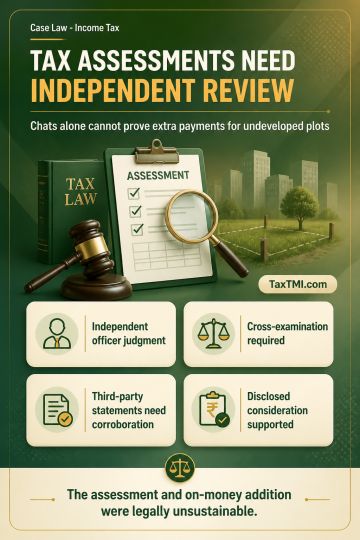
Independent assessment discretion and corroborated electronic evidence determine validity of on-money additions and undisclosed-consideration assessme...
Classification focused on whether products are Ayurvedic medicaments or cosmetics, applying the twin test of ingredient composition and common parlance together with statutory licensing; Tribunal found ingredients, dosages and drug licences established medicinal character and classified goods under Chapter 30, displacing the cosmetics classification. Liability was tested by manufacturer status under loan licence law: the job worker was held to be the manufacturer and pre-August 2011 demands against the principal were set aside. The appellant qualified for SSI exemption for Sept 2011-Feb 2012 and had paid duty from March 2012 after registration, so no differential duty nor penalties were imposed.
Classification focused on whether products are Ayurvedic medicaments or cosmetics, applying the twin test of ingredient composition and common parlance together with statutory licensing; Tribunal found ingredients, dosages and drug licences established medicinal character and classified goods under Chapter 30, displacing the cosmetics classification. Liability was tested by manufacturer status under loan licence law: the job worker was held to be the manufacturer and pre-August 2011 demands against the principal were set aside. The appellant qualified for SSI exemption for Sept 2011-Feb 2012 and had paid duty from March 2012 after registration, so no differential duty nor penalties were imposed.
Note: It is a system-generated summary and is for quick reference only.
 TaxTMI
  TaxTMI
 of 4828






 Join Channel


