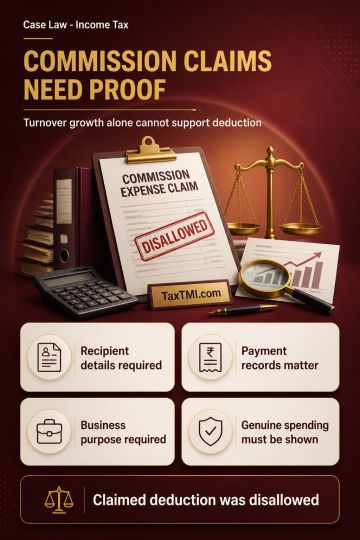
Business expenditure deduction requires proof of genuine commission payments and commercial allowability; turnover growth alone cannot validate the cl...
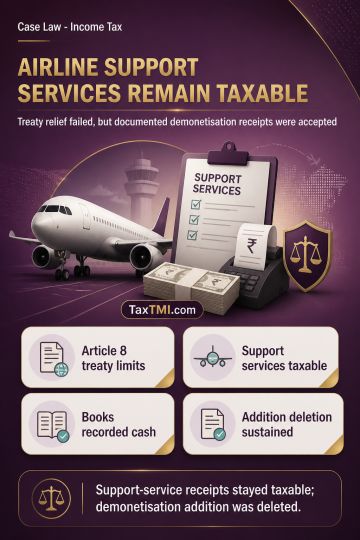
Article 8 treaty coverage excluded third-party airline support services, while documented demonetisation cash receipts remained accepted business inco...
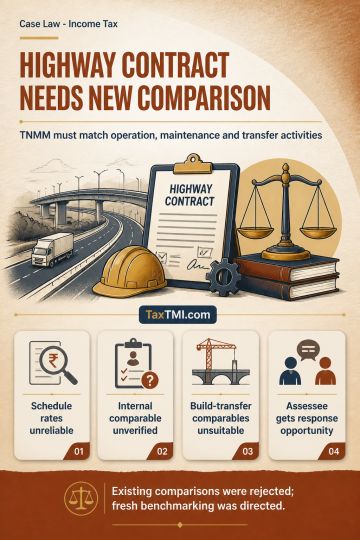
Functional comparability under TNMM requires highway contract benchmarks to reflect operation, maintenance and transfer activities, requiring fresh be...
Petrol and diesel remain outside the levy of GST until formally notified for inclusion, so supplies incorporating these fuels cannot be treated as taxable under the GST framework; accordingly the composite supply doctrine does not apply where one element is petrol/diesel because all components must be taxable for a composite supply to arise. Until GST inclusion, petroleum products continue to be taxed under the pre GST regime (central excise and State VAT), and VAT paid on such fuel does not qualify as input tax credit under the CGST input tax credit provisions.
Petrol and diesel remain outside the levy of GST until formally notified for inclusion, so supplies incorporating these fuels cannot be treated as taxable under the GST framework; accordingly the composite supply doctrine does not apply where one element is petrol/diesel because all components must be taxable for a composite supply to arise. Until GST inclusion, petroleum products continue to be taxed under the pre GST regime (central excise and State VAT), and VAT paid on such fuel does not qualify as input tax credit under the CGST input tax credit provisions.
Note: It is a system-generated summary and is for quick reference only.
 TaxTMI
 of 4790




 Join Channel


 TaxTMI
