Mutual fund maturity rules require proper rollover, redemption, disclosure, and due diligence; investor gains cannot excuse regulatory breaches or pen...
Threshold exemption excludes exempt services, while stamp-paper purchases avoid reverse charge; consequential service tax penalties were also set asid...
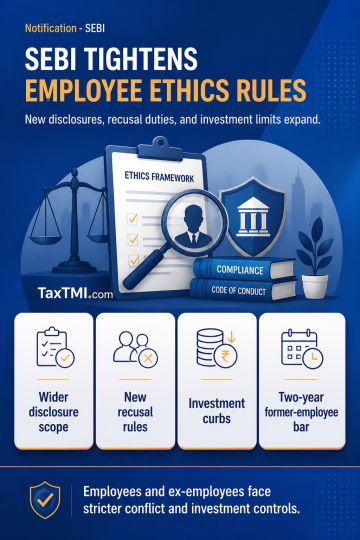
Employee conflict disclosures and investment restrictions expand with new recusal duties, post-employment limits, and compliance reporting requirement...
The article addresses whether corpus/sinking fund contributions collected by a residential association constitute "consideration" and attract GST. It applies the statutory definitions of supply and consideration, rejects the doctrine of mutuality by operation of the deeming provision, and treats the association as a person distinct from members. Corpus contributions are characterised as advances for future supply of membership-organisation services and are distinct from recurring monthly maintenance by purpose and accounting. Consequently time-of-supply rules for advances apply and GST liability arises on receipt/collection. Questions on accounting, documentation and audit demonstration were held outside the admissible advance-ruling scope.
The article addresses whether corpus/sinking fund contributions collected by a residential association constitute "consideration" and attract GST. It applies the statutory definitions of supply and consideration, rejects the doctrine of mutuality by operation of the deeming provision, and treats the association as a person distinct from members. Corpus contributions are characterised as advances for future supply of membership-organisation services and are distinct from recurring monthly maintenance by purpose and accounting. Consequently time-of-supply rules for advances apply and GST liability arises on receipt/collection. Questions on accounting, documentation and audit demonstration were held outside the admissible advance-ruling scope.
Note: It is a system-generated summary and is for quick reference only.
 TaxTMI
 of 4801













 Join Channel


 TaxTMI
