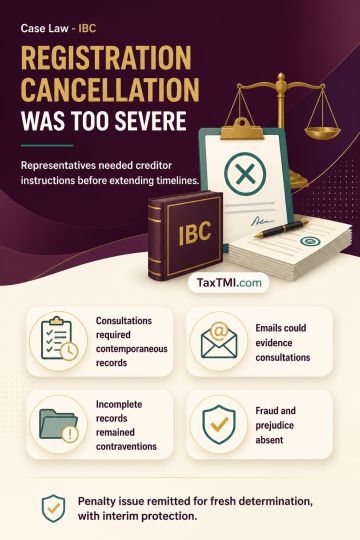
Disciplinary proportionality requires penalties for Authorised Representative misconduct to match proven harm, leading to reconsideration of registrat...
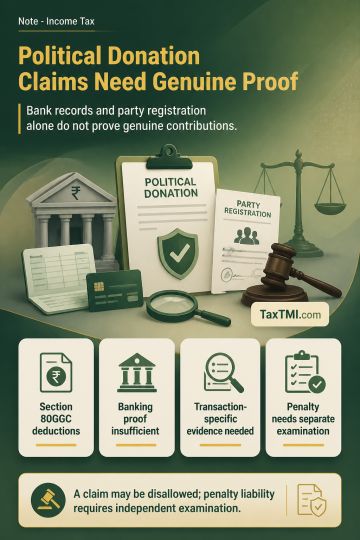
Political contribution deductions require genuine transactions; banking records and party registration alone cannot defeat evidence of accommodation e...
Post-death GST liability permits fresh proceedings against legal representatives, while discontinued-business recovery remains limited to the inherite...
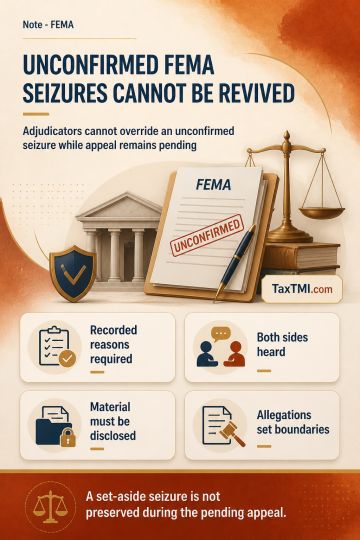
Non-confirmation of FEMA seizure prevents adjudicators from overriding pending appellate findings on recorded reasons and suspected foreign asset hold...
Enforcement against a non-party security provider is permitted where the provider voluntarily issued a cheque as security for the disputed arbitrable liability; the court treated the undated cheque, corresponding to the tribunal claim, as a voluntary guaranty thereby exposing the issuer to enforcement of the foreign arbitral award and corrective award. The decision rejected a requirement to pierce the corporate veil because liability rested on the 2nd respondent's own undertaking; the 1st respondent's insolvency reinforced the necessity of enforcement against the security provider to prevent injustice. The appellate order allows enforcement jointly and severally against both respondents on the cheque basis.
Enforcement against a non-party security provider is permitted where the provider voluntarily issued a cheque as security for the disputed arbitrable liability; the court treated the undated cheque, corresponding to the tribunal claim, as a voluntary guaranty thereby exposing the issuer to enforcement of the foreign arbitral award and corrective award. The decision rejected a requirement to pierce the corporate veil because liability rested on the 2nd respondent's own undertaking; the 1st respondent's insolvency reinforced the necessity of enforcement against the security provider to prevent injustice. The appellate order allows enforcement jointly and severally against both respondents on the cheque basis.
Note: It is a system-generated summary and is for quick reference only.
 TaxTMI
  TaxTMI
 of 4921