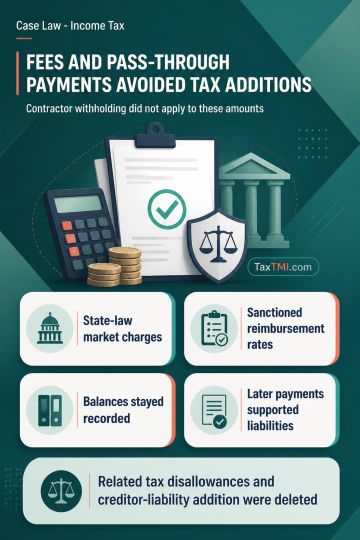
Transfer-pricing treatment of ITeS margins excludes pass-through tax recoveries and separate delayed-receivables interest after working-capital adjust...
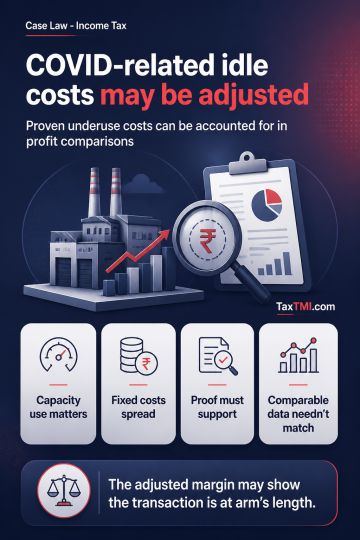
Capacity-utilisation adjustments under TNMM can neutralise substantiated COVID-related idle costs where underutilisation materially affects profitabil...
TNMM functional comparability requires excluding rice manufacturers from a pure Basmati rice trader's benchmark and recognising operating export recei...
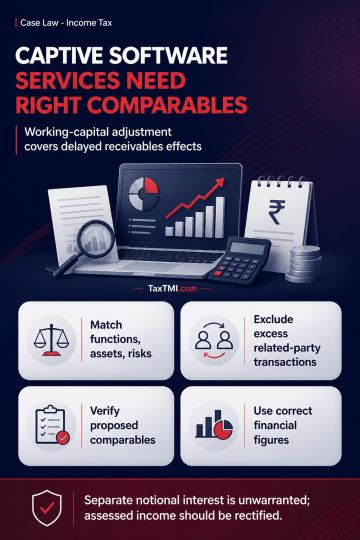
Working-capital adjustment subsumes delayed-receivable effects in TNMM benchmarking of captive software-development services, avoiding separate notion...
Transfer-pricing comparability requires exclusion of financially illogical super-profit comparables and correction of unsupported annual-report and ma...
Charitable character assessment preserves Section 80G approval despite inclusive spiritual teachings and incidental religious expenditure within the s...
Penalty proceedings for cash-loan acceptance require assessment proceedings and recorded Assessing Officer satisfaction; absent these, the proceedings...
Page of 4828
Press 'Enter' after typing page number.
161 to 180 of 96556 Results
❮
❯
❯❯
0 / 200
Expand Note
Add to Folder
No Folders have been created
+
Are you sure you want to delete "My most important" ?
High Court jurisdiction to review preventive detention orders pre-execution exists but is constrained by judicial self-restraint; interference is limited to errors such as wrong statute, wrong person, wrong purpose, vagueness, extraneous grounds, or lack of authority, and normally not available where the proposed detenue has absconded. The court applied precedent distinguishing limited pre-execution review from challenges that would permit an absconder to benefit from evasion, noted the petitioner was a proclaimed offender subject to lookout measures and prosecution steps and had not surrendered, and consequently declined to exercise Article 226 jurisdiction pre-execution while preserving the petitioner's right to challenge the order after surrender under due process safeguards.
High Court jurisdiction to review preventive detention orders pre-execution exists but is constrained by judicial self-restraint; interference is limited to errors such as wrong statute, wrong person, wrong purpose, vagueness, extraneous grounds, or lack of authority, and normally not available where the proposed detenue has absconded. The court applied precedent distinguishing limited pre-execution review from challenges that would permit an absconder to benefit from evasion, noted the petitioner was a proclaimed offender subject to lookout measures and prosecution steps and had not surrendered, and consequently declined to exercise Article 226 jurisdiction pre-execution while preserving the petitioner's right to challenge the order after surrender under due process safeguards.
Note: It is a system-generated summary and is for quick reference only.
 TaxTMI
  TaxTMI
 of 4828

















 Join Channel