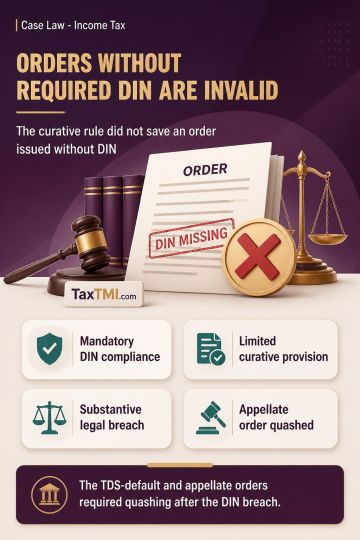
Document Identification Number compliance renders TDS-default orders invalid where mandatory DIN requirements are breached and curative provision does...
The piece addresses the mandatory nature of a signature on reopening notices, explaining that the statutory use of "shall" requires signing even for electronic communications and that a deeming/authentication clause does not negate this obligation; consequently an unsigned notice is invalid and void ab initio. The legal effect is that an invalid notice cannot confer jurisdiction on the assessing officer to invoke reassessment under the reopening provisions, rendering any reassessment and downstream proceedings a nullity. The conclusion emphasises compliance with signature formalities as determinative of jurisdictional validity.
The piece addresses the mandatory nature of a signature on reopening notices, explaining that the statutory use of "shall" requires signing even for electronic communications and that a deeming/authentication clause does not negate this obligation; consequently an unsigned notice is invalid and void ab initio. The legal effect is that an invalid notice cannot confer jurisdiction on the assessing officer to invoke reassessment under the reopening provisions, rendering any reassessment and downstream proceedings a nullity. The conclusion emphasises compliance with signature formalities as determinative of jurisdictional validity.
Note: It is a system-generated summary and is for quick reference only.
 TaxTMI
  TaxTMI
 of 4918