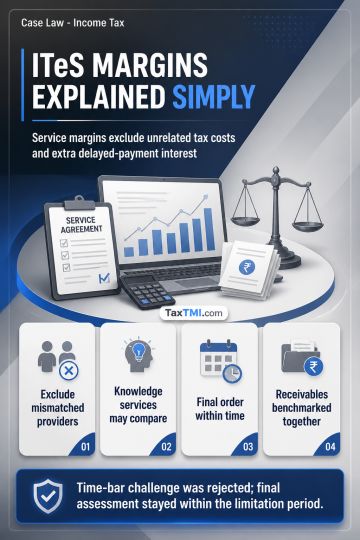
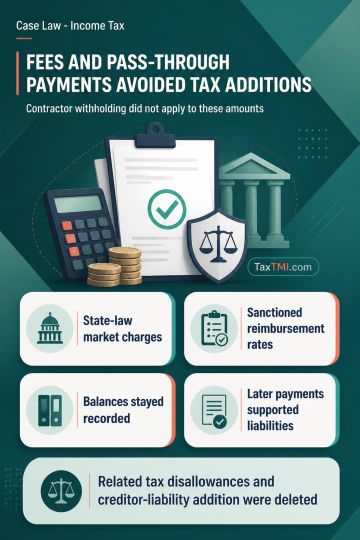
Transfer-pricing treatment of ITeS margins excludes pass-through tax recoveries and separate delayed-receivables interest after working-capital adjust...
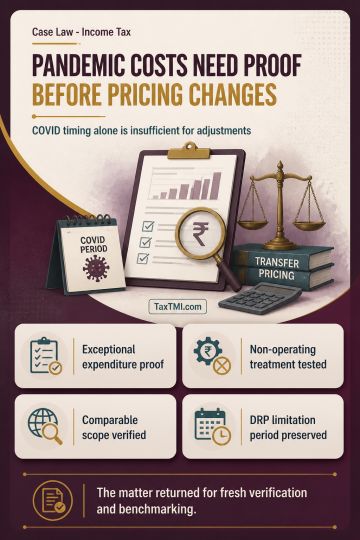
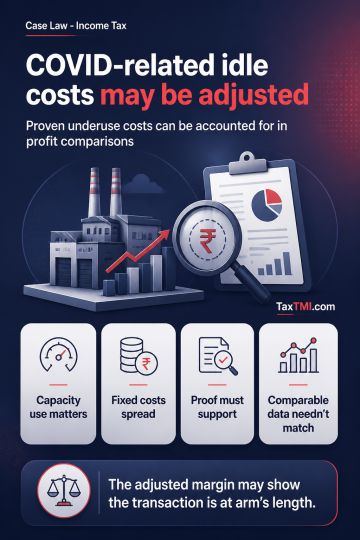
Capacity-utilisation adjustments under TNMM can neutralise substantiated COVID-related idle costs where underutilisation materially affects profitabil...
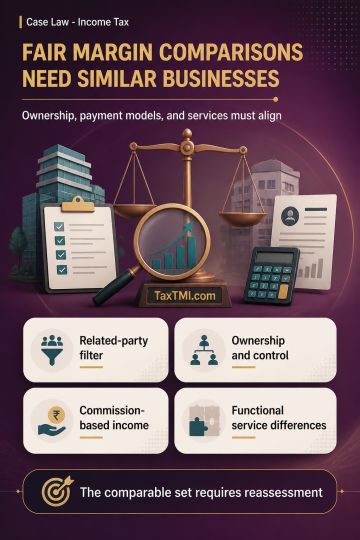
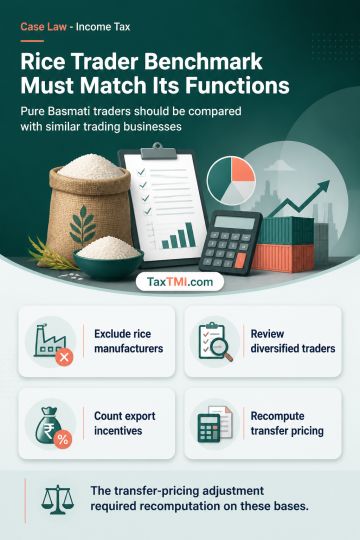
TNMM functional comparability requires excluding rice manufacturers from a pure Basmati rice trader's benchmark and recognising operating export recei...
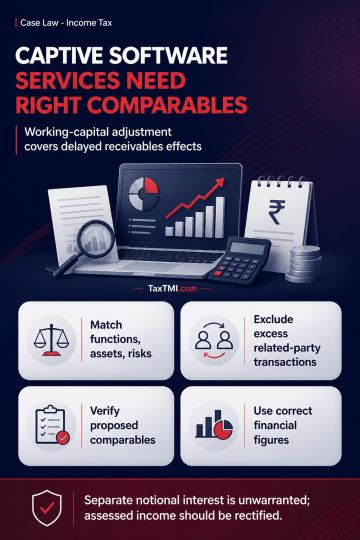
Working-capital adjustment subsumes delayed-receivable effects in TNMM benchmarking of captive software-development services, avoiding separate notion...
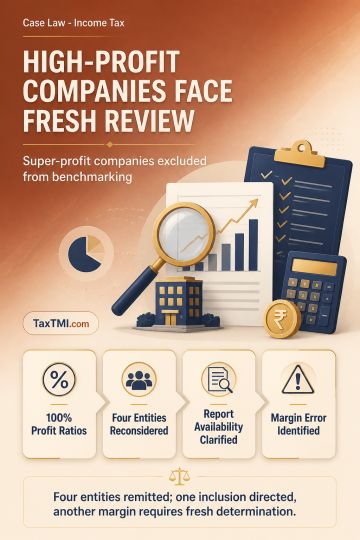
Transfer-pricing comparability requires exclusion of financially illogical super-profit comparables and correction of unsupported annual-report and ma...
Charitable character assessment preserves Section 80G approval despite inclusive spiritual teachings and incidental religious expenditure within the s...
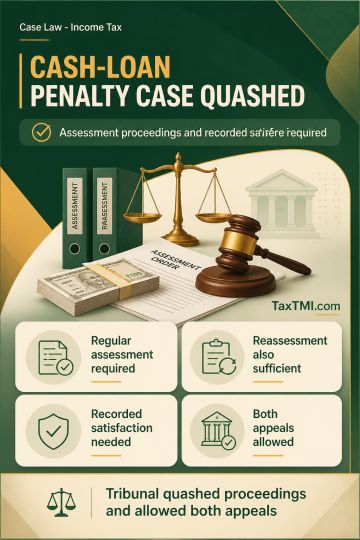
Penalty proceedings for cash-loan acceptance require assessment proceedings and recorded Assessing Officer satisfaction; absent these, the proceedings...
Page of 4828
Press 'Enter' after typing page number.
161 to 180 of 96556 Results
❮
❯
❯❯
0 / 200
Expand Note
Add to Folder
No Folders have been created
+
Are you sure you want to delete "My most important" ?
Bank account credits were held to originate from a third party and the account functioned as a conduit; therefore the credited sums were not treated as the assessee's unexplained income. The Tribunal relied on bank statements, deposit-withdrawal patterns and admissions to conclude the assessee permitted use of his account for Shree Impex, with a different principal beneficiary. Because the assessee facilitated transactions and obtained a limited benefit, the Tribunal treated the correct tax consequence as assessable commission income and directed assessment of commission on the turnover routed through the account, applying the same reasoning to other identical assessment years.
Bank account credits were held to originate from a third party and the account functioned as a conduit; therefore the credited sums were not treated as the assessee's unexplained income. The Tribunal relied on bank statements, deposit-withdrawal patterns and admissions to conclude the assessee permitted use of his account for Shree Impex, with a different principal beneficiary. Because the assessee facilitated transactions and obtained a limited benefit, the Tribunal treated the correct tax consequence as assessable commission income and directed assessment of commission on the turnover routed through the account, applying the same reasoning to other identical assessment years.
Note: It is a system-generated summary and is for quick reference only.
 TaxTMI
  TaxTMI
 of 4828




 Join Channel