Reassessment disclosure requirements permit stated reasons without revealing information sources, but prior-taxation claims require full examination b...
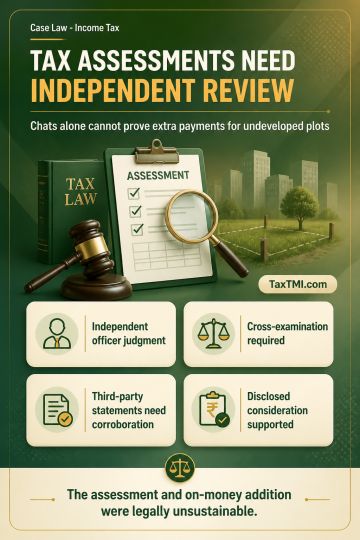
Independent assessment discretion and corroborated electronic evidence determine validity of on-money additions and undisclosed-consideration assessme...
Service of notice and contractual debt acknowledgment preserved insolvency admission against a corporate guarantor despite limitation and natural just...
Where an addition in assessment arose solely from an estimation of non-genuine purchases and the taxable profit element was computed on that estimate, the statutory threshold for levying a penalty for concealment or furnishing inaccurate particulars was not met. Precedents establish that estimate-based disallowances, made without concrete evidence of deliberate concealment, do not attract penalty liability. Applying that principle, the tribunal directed deletion of the penalty levied in respect of the assessment year because the impugned addition was founded on estimate and therefore did not justify a penalty.
Where an addition in assessment arose solely from an estimation of non-genuine purchases and the taxable profit element was computed on that estimate, the statutory threshold for levying a penalty for concealment or furnishing inaccurate particulars was not met. Precedents establish that estimate-based disallowances, made without concrete evidence of deliberate concealment, do not attract penalty liability. Applying that principle, the tribunal directed deletion of the penalty levied in respect of the assessment year because the impugned addition was founded on estimate and therefore did not justify a penalty.
Note: It is a system-generated summary and is for quick reference only.
 TaxTMI
  TaxTMI
 of 4830




















 Join Channel


