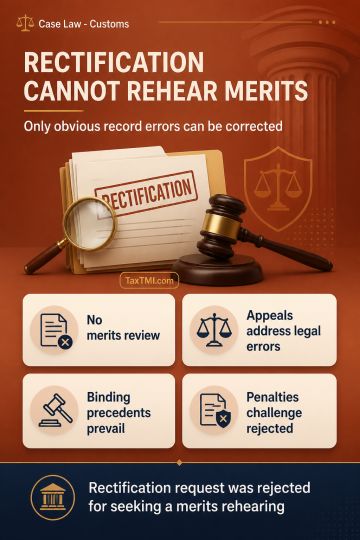
Rectification of mistake remains limited to self-evident record errors, preventing merits review through miscellaneous applications and preserving fin...
Tender creditworthiness conditions may extend to de facto Promoter Directors, with post-participation challenges generally barred absent arbitrariness...
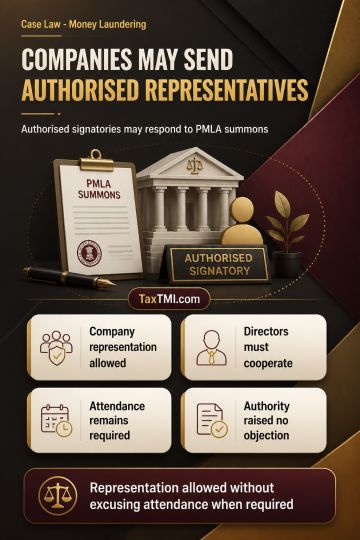
Corporate representation in PMLA summons proceedings permitted through an authorised signatory, subject to directors' continuing cooperation and atten...
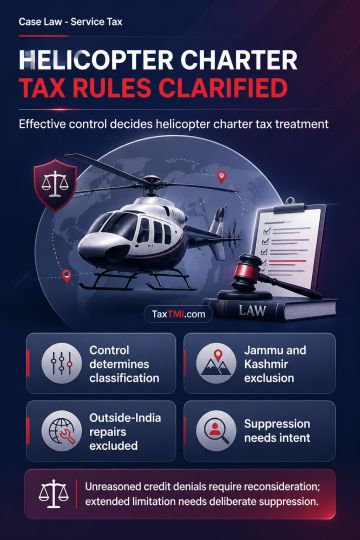
Helicopter charter classification requires effective control analysis, while territorial performance, reasoned credit orders and wilful suppression de...
Specified fund definition expands PAN exemption eligibility for registered alternative investment funds and qualifying International Financial Service...
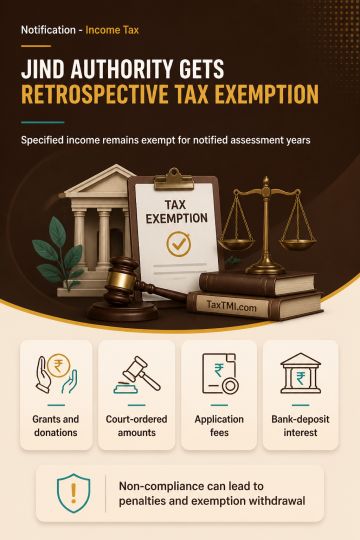
Tax exemption for specified legal-services authority income applies retrospectively, subject to non-commercial activity, unchanged income sources, and...
The High Court held that the Appellate Tribunal under the CGST Act, read together (Sections 111-113), is bound by the CPC procedure, guided by principles of natural justice and has power to regulate its procedure; it also possesses civil court powers and may enforce orders as decrees. The Tribunal's jurisdiction to pass substantive orders necessarily includes inherent and incidental authority to grant interim relief, including stay of recovery pending appeal, to make the appellate remedy effective. The petitioner was directed to move the Tribunal within two weeks; limited interim protection was granted restraining action on the recovery notice until the Tribunal decides any interim application.
The High Court held that the Appellate Tribunal under the CGST Act, read together (Sections 111-113), is bound by the CPC procedure, guided by principles of natural justice and has power to regulate its procedure; it also possesses civil court powers and may enforce orders as decrees. The Tribunal's jurisdiction to pass substantive orders necessarily includes inherent and incidental authority to grant interim relief, including stay of recovery pending appeal, to make the appellate remedy effective. The petitioner was directed to move the Tribunal within two weeks; limited interim protection was granted restraining action on the recovery notice until the Tribunal decides any interim application.
Note: It is a system-generated summary and is for quick reference only.
 TaxTMI
 of 4803











 Join Channel


 TaxTMI