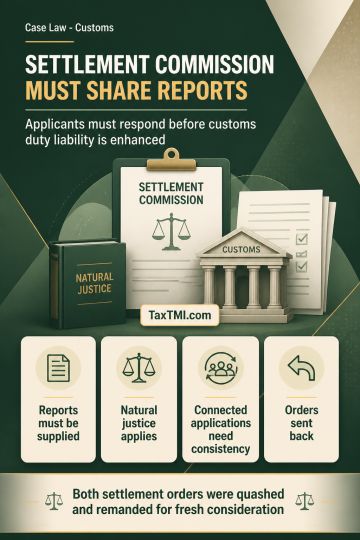
Opportunity to respond to jurisdictional reports is mandatory before customs settlement duty enhancement; connected applications require consistent ad...
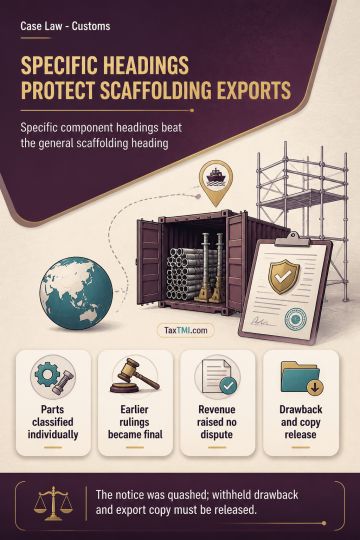
Specific customs headings for scaffolding components prevail over general classification, invalidating misclassification proceedings and enabling with...
Page of 4801
Press 'Enter' after typing page number.
561 to 580 of 96001 Results
❮
❯
❯❯
0 / 200
Expand Note
Add to Folder
No Folders have been created
+
Are you sure you want to delete "My most important" ?
The High Court held that the Appellate Tribunal under the CGST Act, read together (Sections 111-113), is bound by the CPC procedure, guided by principles of natural justice and has power to regulate its procedure; it also possesses civil court powers and may enforce orders as decrees. The Tribunal's jurisdiction to pass substantive orders necessarily includes inherent and incidental authority to grant interim relief, including stay of recovery pending appeal, to make the appellate remedy effective. The petitioner was directed to move the Tribunal within two weeks; limited interim protection was granted restraining action on the recovery notice until the Tribunal decides any interim application.
The High Court held that the Appellate Tribunal under the CGST Act, read together (Sections 111-113), is bound by the CPC procedure, guided by principles of natural justice and has power to regulate its procedure; it also possesses civil court powers and may enforce orders as decrees. The Tribunal's jurisdiction to pass substantive orders necessarily includes inherent and incidental authority to grant interim relief, including stay of recovery pending appeal, to make the appellate remedy effective. The petitioner was directed to move the Tribunal within two weeks; limited interim protection was granted restraining action on the recovery notice until the Tribunal decides any interim application.
Note: It is a system-generated summary and is for quick reference only.
 TaxTMI
 of 4801








 Join Channel


 TaxTMI