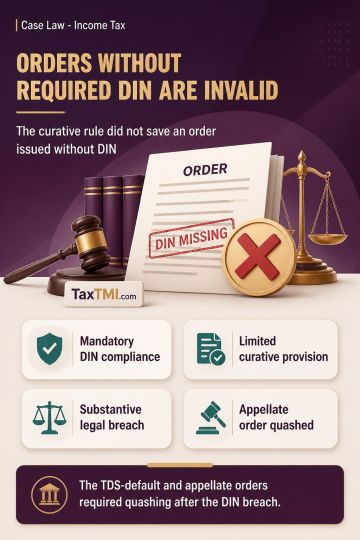
Document Identification Number compliance renders TDS-default orders invalid where mandatory DIN requirements are breached and curative provision does...
High Court reiterates that extraordinary writ jurisdiction should not bypass the alternative remedy of appeal except in exceptional circumstances; the appellate authority has wider powers to make further inquiry and may confirm, modify or annul impugned orders, so contested questions of fact should be addressed on appeal. Failure to plead or produce best evidence permits an adverse inference and the petitioner bears the burden to supply documents showing active business and absence of false invoices. Because the petitioner withheld documentary evidence and has not shown prejudice from any non supply, the petition is dismissed and the statutory appeal remedy under section 107(11) must be pursued.
High Court reiterates that extraordinary writ jurisdiction should not bypass the alternative remedy of appeal except in exceptional circumstances; the appellate authority has wider powers to make further inquiry and may confirm, modify or annul impugned orders, so contested questions of fact should be addressed on appeal. Failure to plead or produce best evidence permits an adverse inference and the petitioner bears the burden to supply documents showing active business and absence of false invoices. Because the petitioner withheld documentary evidence and has not shown prejudice from any non supply, the petition is dismissed and the statutory appeal remedy under section 107(11) must be pursued.
Note: It is a system-generated summary and is for quick reference only.
 TaxTMI
  TaxTMI
 of 4918