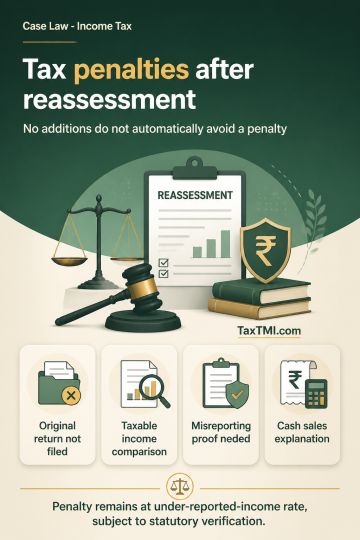
Under-reporting on a first reassessment return attracts penalty, while enhanced misreporting penalty requires proof of a statutory misreporting catego...
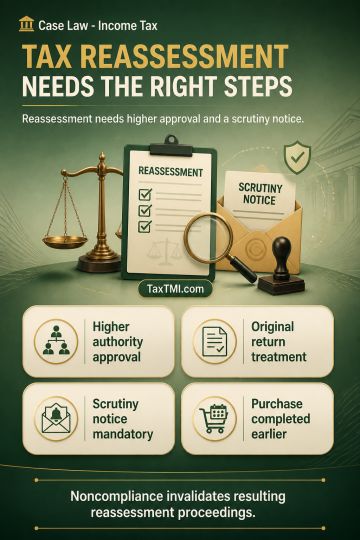
Form 26AS evidence requires successor-entity accounting verification after business transfer, while invoice-supported related-party advertising expend...
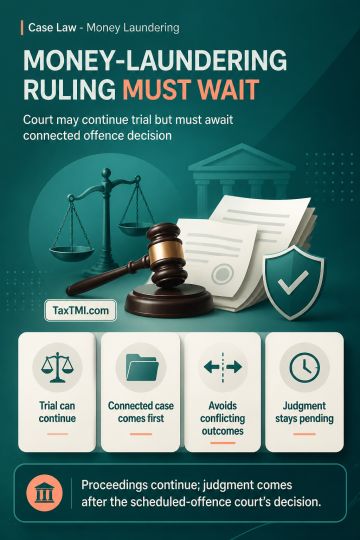
Money-laundering judgment timing requires awaiting the scheduled-offence decision despite continuation of the underlying trial where outcomes directly...
Page of 4921
Press 'Enter' after typing page number.
141 to 160 of 98411 Results
❮
❯
❯❯
0 / 200
Expand Note
Add to Folder
No Folders have been created
+
Are you sure you want to delete "My most important" ?
CESTAT considered whether payments to a foreign supplier's local agent and linked product support/service payments form part of assessable transaction value under the Customs Valuation Rules, applying the transaction value and arm's length principles and Rule 9(1)(e). The tribunal upheld the adjudicating authority's factual findings on valuation and declined Revenue's challenge for lack of fresh specifics, while exercising discretion under the Customs Act to substantially reduce the penalty under the discretionary penalty provision given mitigating factors including ongoing Supreme Court litigation and public sector status; appeal by Revenue dismissed and importer appeal partly allowed.
CESTAT considered whether payments to a foreign supplier's local agent and linked product support/service payments form part of assessable transaction value under the Customs Valuation Rules, applying the transaction value and arm's length principles and Rule 9(1)(e). The tribunal upheld the adjudicating authority's factual findings on valuation and declined Revenue's challenge for lack of fresh specifics, while exercising discretion under the Customs Act to substantially reduce the penalty under the discretionary penalty provision given mitigating factors including ongoing Supreme Court litigation and public sector status; appeal by Revenue dismissed and importer appeal partly allowed.
Note: It is a system-generated summary and is for quick reference only.
 TaxTMI
  TaxTMI
 of 4921