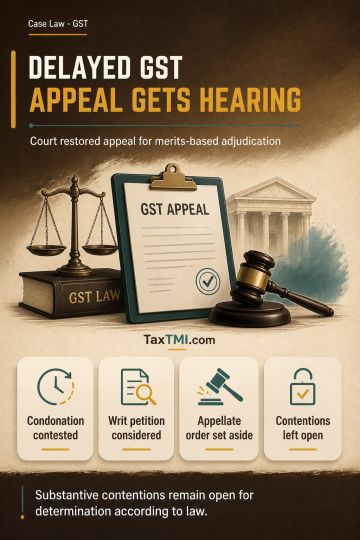
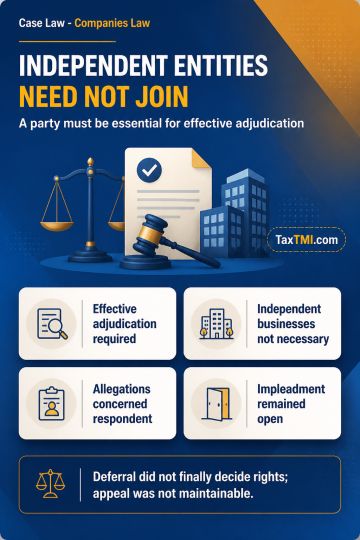
Necessary-party requirements limit impleadment of independent entities, while deferred consideration does not create an appealable adverse determinati...
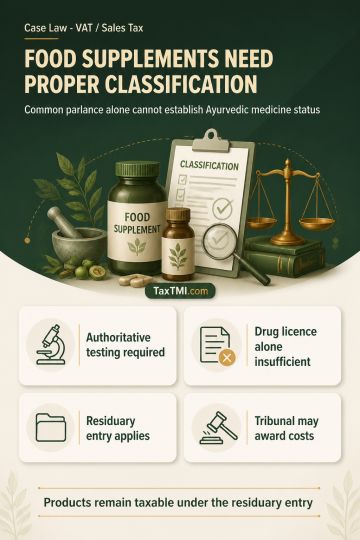
Food supplement classification requires common parlance and authoritative tests, preventing treatment as proprietary Ayurvedic medicines without suppo...
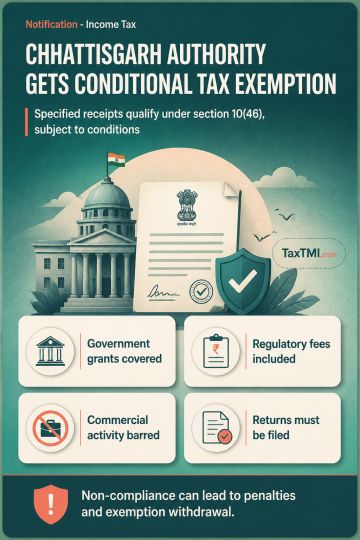
Specified regulatory authority income receives conditional tax exemption, subject to non-commercial activity, unchanged income character, and return f...
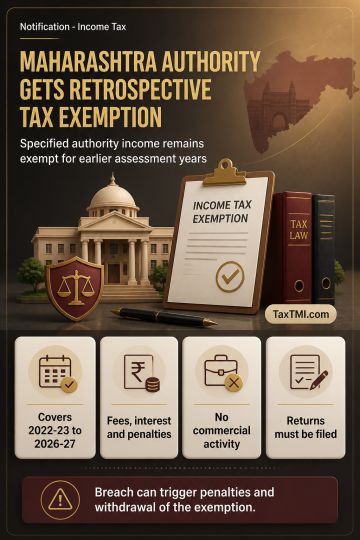
Tax exemption for regulatory authority income applies retrospectively, subject to non-commercial activity, unchanged income sources, and return-filing...
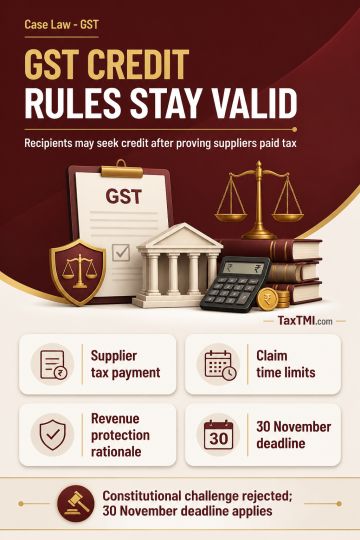
Input tax credit conditions remain constitutionally valid, with eligible recipient claims considered under GST circulars and retrospective filing dead...
Reasonable cause under Section 273B operates to preclude imposition of penalties under Sections 271D and 271E where the assessee demonstrably shows bona fide belief and genuineness of transactions; thus deposit of cash in bank accounts, explained as bona fide and not motivated to avoid tax, furnished a reasonable cause and led to relief from penalties. The tribunal applied the ordinary prudence standard for 'reasonable cause'-a cause beyond the assessee's control, without negligence or lack of bona fides-and allowed the appeal on that basis.
Reasonable cause under Section 273B operates to preclude imposition of penalties under Sections 271D and 271E where the assessee demonstrably shows bona fide belief and genuineness of transactions; thus deposit of cash in bank accounts, explained as bona fide and not motivated to avoid tax, furnished a reasonable cause and led to relief from penalties. The tribunal applied the ordinary prudence standard for 'reasonable cause'-a cause beyond the assessee's control, without negligence or lack of bona fides-and allowed the appeal on that basis.
Note: It is a system-generated summary and is for quick reference only.
 TaxTMI
  TaxTMI
 of 4817









 Join Channel