Clean slate principle extinguishes uncrystallised operational claims and bars continuation of pending recovery and arbitral proceedings after plan app...
Works contract classification governs composite layout-development contracts where VAT-paid goods are transferred alongside construction and infrastru...
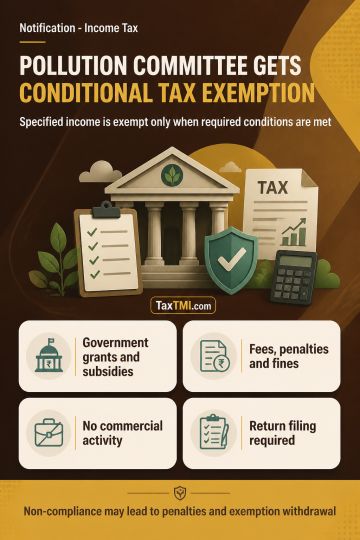
Specified income tax exemption for pollution control body remains conditional on non-commercial activity, unchanged income character, and return filin...
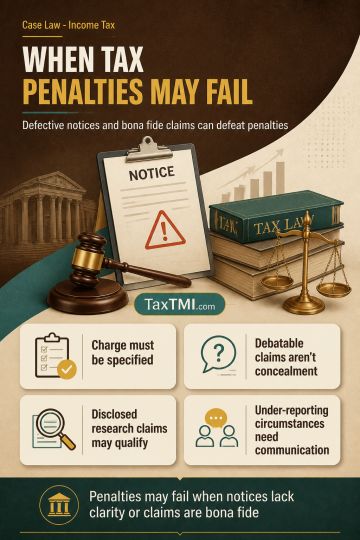
The text examines imposition of penalty under s.271(1)(c) for bogus purchases and states the controlling legal point that an Assessing Officer must form a clear subjective satisfaction that the assessee consciously concealed particulars of income or deliberately furnished inaccurate particulars before levying penalty; mere ad hoc estimation of profit in bogus purchases does not suffice. The appellate authority reduced the added profit percentages, and the article concludes that where the AO restricted profit element by estimation without a finding of deliberate concealment or inaccurate particulars, penalty could not be sustained, resulting in a decision favorable to the assessee.
The text examines imposition of penalty under s.271(1)(c) for bogus purchases and states the controlling legal point that an Assessing Officer must form a clear subjective satisfaction that the assessee consciously concealed particulars of income or deliberately furnished inaccurate particulars before levying penalty; mere ad hoc estimation of profit in bogus purchases does not suffice. The appellate authority reduced the added profit percentages, and the article concludes that where the AO restricted profit element by estimation without a finding of deliberate concealment or inaccurate particulars, penalty could not be sustained, resulting in a decision favorable to the assessee.
Note: It is a system-generated summary and is for quick reference only.
 TaxTMI
  TaxTMI
 of 4819















 Join Channel


