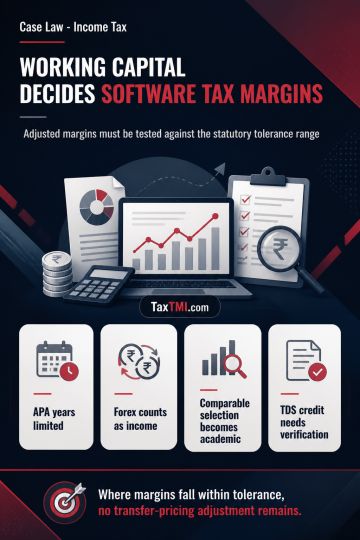
Working-capital adjustment determines whether software-services transfer-pricing margins fall within the statutory tolerance range, eliminating any ad...
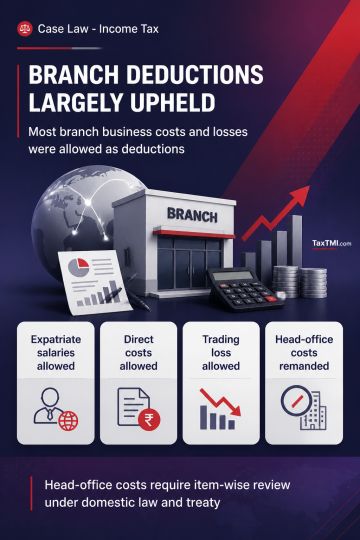
Permanent establishment deductions upheld for expatriate salaries, direct costs and trading losses, while head-office costs require fresh classificati...
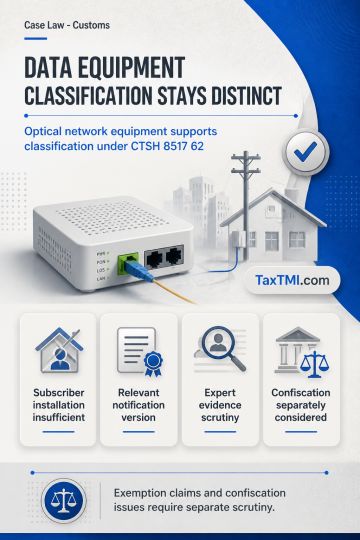
Data transmission equipment classification under CTSH 8517 62 remains distinct from residual classification, with exemption evidence requiring scrutin...
Admissibility of confessions under Section 108 of the Customs Act and the evidentiary value of prior testimony under Section 244(1) Cr.P.C. were central. The court applied the principle that a co-accused's confession is only corroborative and cannot be treated as substantive proof, and therefore set that aside to examine other evidence. Prior testimony was inadmissible under the Evidence Act because the complainant failed to establish the witness's unavailability or incapacity, and the complainant did not invoke the alternative business-records route. On that basis, the trial court's rejection of the testimony and acquittal of the remaining accused was upheld.
Admissibility of confessions under Section 108 of the Customs Act and the evidentiary value of prior testimony under Section 244(1) Cr.P.C. were central. The court applied the principle that a co-accused's confession is only corroborative and cannot be treated as substantive proof, and therefore set that aside to examine other evidence. Prior testimony was inadmissible under the Evidence Act because the complainant failed to establish the witness's unavailability or incapacity, and the complainant did not invoke the alternative business-records route. On that basis, the trial court's rejection of the testimony and acquittal of the remaining accused was upheld.
Note: It is a system-generated summary and is for quick reference only.
 TaxTMI
 of 4805








 Join Channel


 TaxTMI