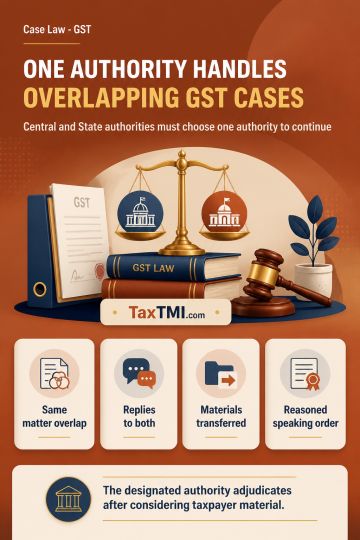
Overlapping GST proceedings require Central and State authorities to designate one competent authority for coordinated adjudication of the same matter...
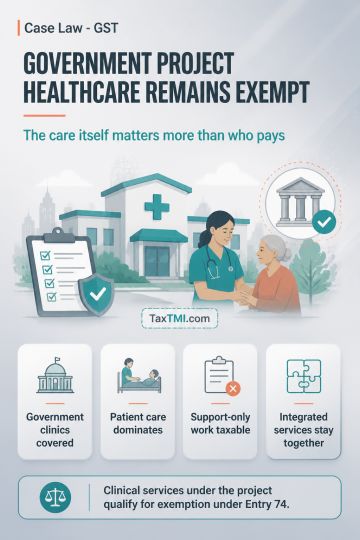
Composite healthcare supplies retain exemption when patient care is the contract's essential character, despite payment through an implementing agency...
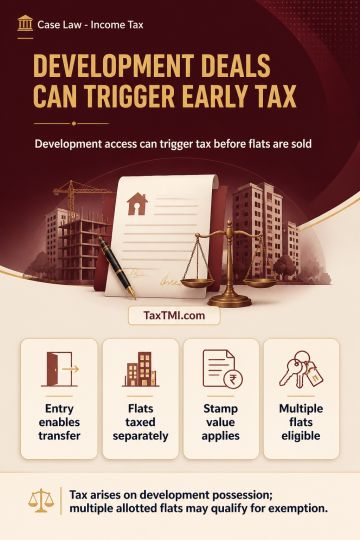
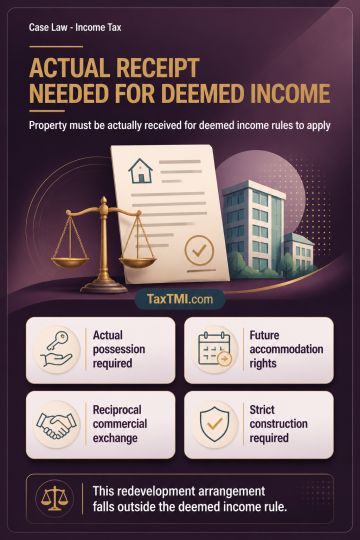
Receipt of immovable property requires actual possession or enjoyment; redevelopment allotments exchanged for tenancy rights fall outside deemed incom...
Classification guidance applies GIR principles and HSN Explanatory Notes to determine tariff headings for internally or externally threaded pipe fittings. The note instructs preference for specific tariff entries over residuary entries, applying the General Rules of Interpretation to identify 'elbows, bends, sleeves, tees and crosses' as included shapes. Operatively, such fittings are classifiable by material under the Customs Tariff: stainless steel under HS 73072200, copper under HS 74121000, brass under HS 74122019, and bronze under HS 74122090, with thread type (internal/external) and tapered self-sealing design treated as characteristic features.
Classification guidance applies GIR principles and HSN Explanatory Notes to determine tariff headings for internally or externally threaded pipe fittings. The note instructs preference for specific tariff entries over residuary entries, applying the General Rules of Interpretation to identify 'elbows, bends, sleeves, tees and crosses' as included shapes. Operatively, such fittings are classifiable by material under the Customs Tariff: stainless steel under HS 73072200, copper under HS 74121000, brass under HS 74122019, and bronze under HS 74122090, with thread type (internal/external) and tapered self-sealing design treated as characteristic features.
Note: It is a system-generated summary and is for quick reference only.
 TaxTMI
 of 4805









 Join Channel


 TaxTMI