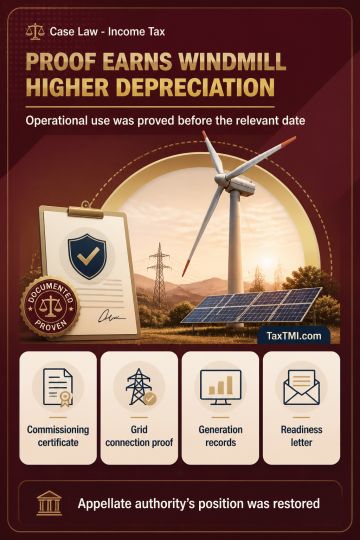
Windmill commissioning evidence supported higher depreciation where grid connection and electricity generation proved operational use before the relev...
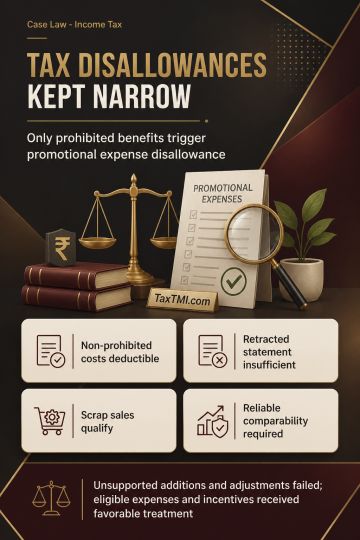
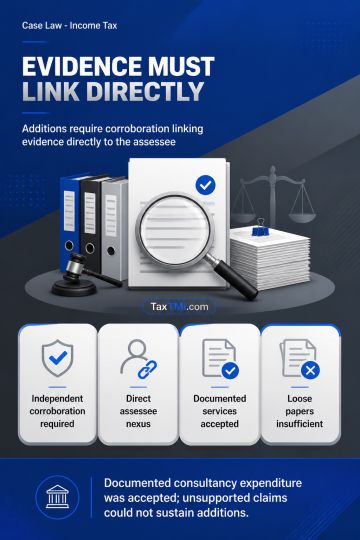
Pharmaceutical promotion and transfer-pricing comparability principles limited disallowances, while uncorroborated search allegations and unsupported ...
Business expenditure substantiation supports scrap credits, statutory payments and expense claims, while depreciation requires proof of actual busines...
Classification guidance applies GIR principles and HSN Explanatory Notes to determine tariff headings for internally or externally threaded pipe fittings. The note instructs preference for specific tariff entries over residuary entries, applying the General Rules of Interpretation to identify 'elbows, bends, sleeves, tees and crosses' as included shapes. Operatively, such fittings are classifiable by material under the Customs Tariff: stainless steel under HS 73072200, copper under HS 74121000, brass under HS 74122019, and bronze under HS 74122090, with thread type (internal/external) and tapered self-sealing design treated as characteristic features.
Classification guidance applies GIR principles and HSN Explanatory Notes to determine tariff headings for internally or externally threaded pipe fittings. The note instructs preference for specific tariff entries over residuary entries, applying the General Rules of Interpretation to identify 'elbows, bends, sleeves, tees and crosses' as included shapes. Operatively, such fittings are classifiable by material under the Customs Tariff: stainless steel under HS 73072200, copper under HS 74121000, brass under HS 74122019, and bronze under HS 74122090, with thread type (internal/external) and tapered self-sealing design treated as characteristic features.
Note: It is a system-generated summary and is for quick reference only.
 TaxTMI
 of 4803










 Join Channel


 TaxTMI
