Revenue neutrality in domestic related-party loans can require deletion of interest transfer pricing adjustments after domestic-transaction verificati...
Pre-enactment land-sale agreements escape stamp-duty value substitution where substantial banking-channel consideration was received before Section 43...
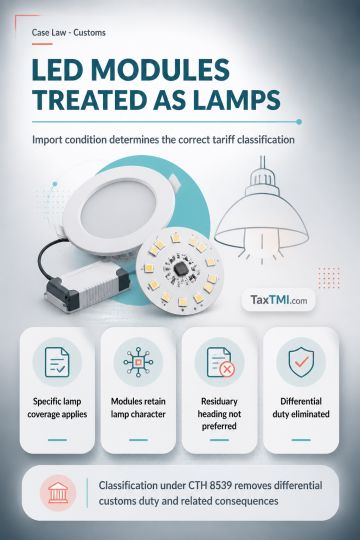
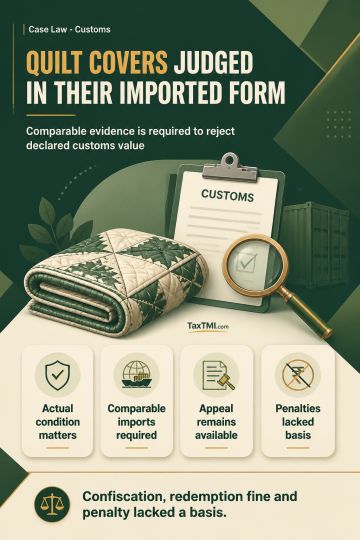
Customs valuation and classification require comparable evidence and assessment of imported goods in their actual condition, invalidating related pena...
Classification guidance applies GIR principles and HSN Explanatory Notes to determine tariff headings for internally or externally threaded pipe fittings. The note instructs preference for specific tariff entries over residuary entries, applying the General Rules of Interpretation to identify 'elbows, bends, sleeves, tees and crosses' as included shapes. Operatively, such fittings are classifiable by material under the Customs Tariff: stainless steel under HS 73072200, copper under HS 74121000, brass under HS 74122019, and bronze under HS 74122090, with thread type (internal/external) and tapered self-sealing design treated as characteristic features.
Classification guidance applies GIR principles and HSN Explanatory Notes to determine tariff headings for internally or externally threaded pipe fittings. The note instructs preference for specific tariff entries over residuary entries, applying the General Rules of Interpretation to identify 'elbows, bends, sleeves, tees and crosses' as included shapes. Operatively, such fittings are classifiable by material under the Customs Tariff: stainless steel under HS 73072200, copper under HS 74121000, brass under HS 74122019, and bronze under HS 74122090, with thread type (internal/external) and tapered self-sealing design treated as characteristic features.
Note: It is a system-generated summary and is for quick reference only.
 TaxTMI
 of 4796
















 Join Channel


 TaxTMI