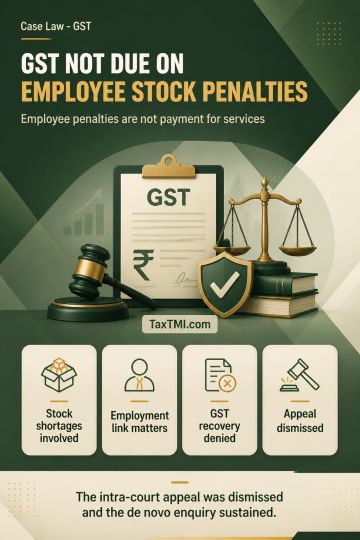
Employee stock-shortage penalties do not constitute consideration for services, preventing GST collection under Schedule II in employment relationship...
Transfer-pricing treatment of ITeS margins excludes pass-through tax recoveries and separate delayed-receivables interest after working-capital adjust...
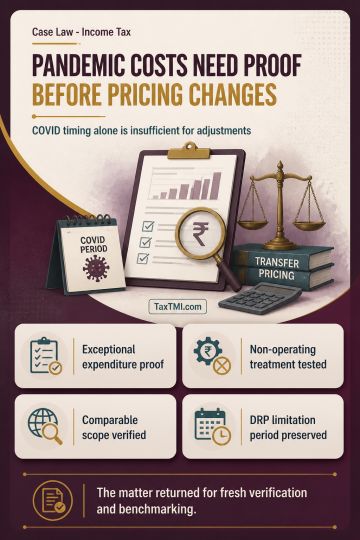
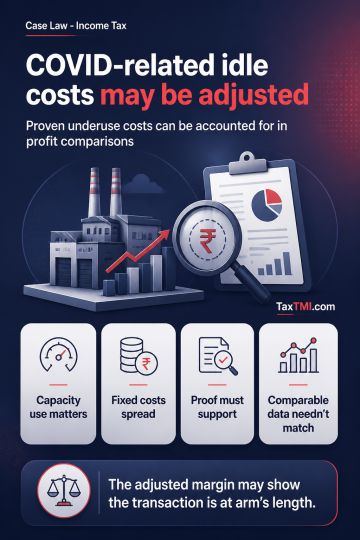
Capacity-utilisation adjustments under TNMM can neutralise substantiated COVID-related idle costs where underutilisation materially affects profitabil...
Page of 4830
Press 'Enter' after typing page number.
181 to 200 of 96587 Results
❮
❯
❯❯
0 / 200
Expand Note
Add to Folder
No Folders have been created
+
Are you sure you want to delete "My most important" ?
Initial defect in authorization to prosecute under the Negotiable Instruments regime is a curable defect; a company acts through natural persons and a complaint stating prima facie that an authorised employee represents the company and has knowledge is sufficient for cognizance. Where authorization is disputed on serious factual grounds the accused may raise the issue at trial and the Magistrate should not dismiss at threshold; invocation of inherent jurisdiction to quash such cognizance is unjustified. Subsequent ratification or board resolution may validate the complaint and additional evidence to that effect was rightly permitted.
Initial defect in authorization to prosecute under the Negotiable Instruments regime is a curable defect; a company acts through natural persons and a complaint stating prima facie that an authorised employee represents the company and has knowledge is sufficient for cognizance. Where authorization is disputed on serious factual grounds the accused may raise the issue at trial and the Magistrate should not dismiss at threshold; invocation of inherent jurisdiction to quash such cognizance is unjustified. Subsequent ratification or board resolution may validate the complaint and additional evidence to that effect was rightly permitted.
Note: It is a system-generated summary and is for quick reference only.
 TaxTMI
  TaxTMI
 of 4830











 Join Channel


