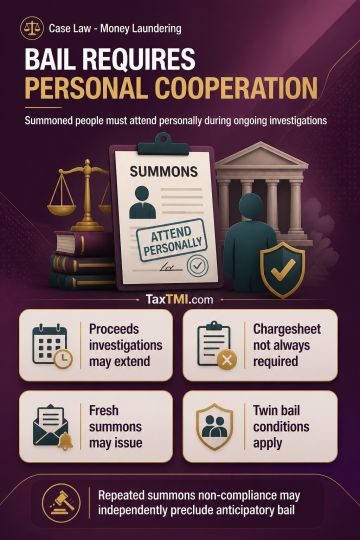
Money-laundering judgment timing requires awaiting the scheduled-offence decision despite continuation of the underlying trial where outcomes directly...
Accredited investor eligibility expands through securities-market exposure, while alternative investment fund disputes require prescribed resolution a...
Customs Assessment Portal centralises classification and valuation guidance to support consistent, transparent and informed compliance across stakehol...
An operational creditor that submitted a resolution plan and exercised voting rights to approve its own plan breached the statutory prohibition on interested parties voting, creating a conflict of interest and applying nemo judex in causa sua to find the CoC decision void for material irregularity; the approval was vitiated for violating principles of natural justice. The Resolution Professional failed in its duty to flag the conflict and statutory bar, warranting IBBI notice and remedial action. Because the statutory framework does not accommodate this situation, the Tribunal found the plan invalid and concluded liquidation is the only viable outcome for the corporate debtor.
An operational creditor that submitted a resolution plan and exercised voting rights to approve its own plan breached the statutory prohibition on interested parties voting, creating a conflict of interest and applying nemo judex in causa sua to find the CoC decision void for material irregularity; the approval was vitiated for violating principles of natural justice. The Resolution Professional failed in its duty to flag the conflict and statutory bar, warranting IBBI notice and remedial action. Because the statutory framework does not accommodate this situation, the Tribunal found the plan invalid and concluded liquidation is the only viable outcome for the corporate debtor.
Note: It is a system-generated summary and is for quick reference only.
 TaxTMI
  TaxTMI
 of 4920