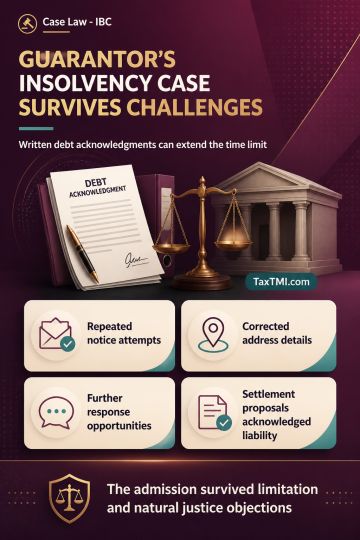
Service of notice and contractual debt acknowledgment preserved insolvency admission against a corporate guarantor despite limitation and natural just...
Original works exemption excludes standalone boulder transportation, leaving subcontracted railway-project transport services subject to service tax l...
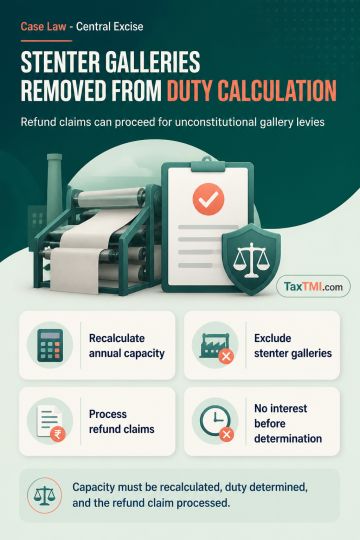
Annual production capacity determinations excluding stenter galleries support refunds for unconstitutional excise levies without an unjust-enrichment ...
Vicarious liability for cheque dishonour requires specific allegations of responsibility and cheque signatory; generic director allegations cannot sus...
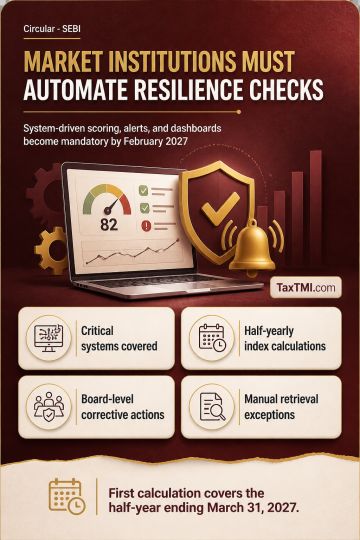
IT Resilience Index requires market infrastructure institutions to automate resilience scoring, early warnings, and continuous service-delivery monito...
Provisional attachment under the Prevention of Money Laundering...
Provisional attachment under Prevention of Money Laundering Act requires exhaustion of statutory remedies; impugned order set aside, appeal to tribunal.
Contents
Summary
Note
Bookmark
Share
✓ Copied successfully !
Print
Print Options
For full text, please login
Login to TaxTMI
Verification Pending
The Email Id has not been verified. Click on the link we have sent on
Provisional attachment under the Prevention of Money Laundering Act rests on a prima facie "reasons to believe" standard, and courts must exercise judicial restraint where a complete statutory adjudicatory hierarchy exists. The High Court affirmed that petitioners should exhaust statutory remedies - provisional attachment, confirmation by the Adjudicating Authority and appeal to the tribunal - before seeking writ relief; recognized exceptions were absent. Reliance on binding precedents reinforced that interim preservation measures need only prima facie satisfaction and merit statutory determination. The impugned order dated June 28, 2022 was set aside and the parties directed to pursue appellate tribunal proceedings expeditiously.
Provisional attachment under the Prevention of Money Laundering Act rests on a prima facie "reasons to believe" standard, and courts must exercise judicial restraint where a complete statutory adjudicatory hierarchy exists. The High Court affirmed that petitioners should exhaust statutory remedies - provisional attachment, confirmation by the Adjudicating Authority and appeal to the tribunal - before seeking writ relief; recognized exceptions were absent. Reliance on binding precedents reinforced that interim preservation measures need only prima facie satisfaction and merit statutory determination. The impugned order dated June 28, 2022 was set aside and the parties directed to pursue appellate tribunal proceedings expeditiously.
Note: It is a system-generated summary and is for quick reference only.
 TaxTMI
  TaxTMI
 of 4828












 Join Channel