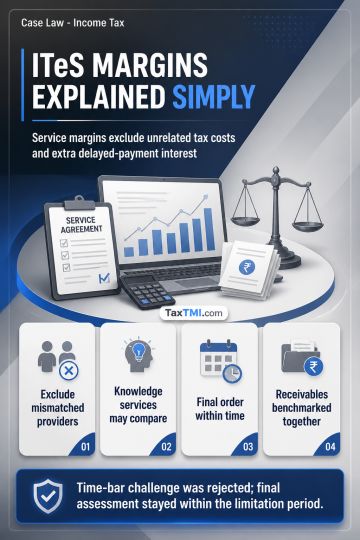
Transfer-pricing treatment of ITeS margins excludes pass-through tax recoveries and separate delayed-receivables interest after working-capital adjust...
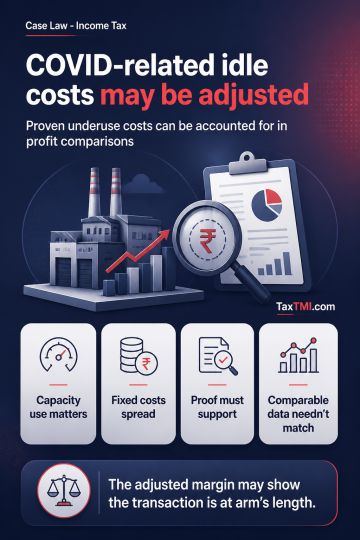
Capacity-utilisation adjustments under TNMM can neutralise substantiated COVID-related idle costs where underutilisation materially affects profitabil...
TNMM functional comparability requires excluding rice manufacturers from a pure Basmati rice trader's benchmark and recognising operating export recei...
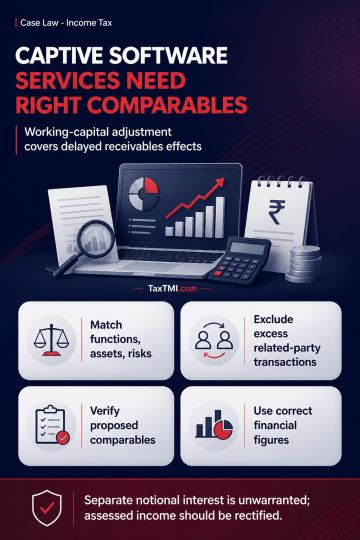
Working-capital adjustment subsumes delayed-receivable effects in TNMM benchmarking of captive software-development services, avoiding separate notion...
Transfer-pricing comparability requires exclusion of financially illogical super-profit comparables and correction of unsupported annual-report and ma...
Charitable character assessment preserves Section 80G approval despite inclusive spiritual teachings and incidental religious expenditure within the s...
Penalty proceedings for cash-loan acceptance require assessment proceedings and recorded Assessing Officer satisfaction; absent these, the proceedings...
Page of 4828
Press 'Enter' after typing page number.
161 to 180 of 96556 Results
❮
❯
❯❯
0 / 200
Expand Note
Add to Folder
No Folders have been created
+
Are you sure you want to delete "My most important" ?
Adjudicating authorities must record reasoned findings when imposing penalties under Customs provisions; failing to apply mind or explain rejection of the importer's explanation renders the penalty order unsustainable and requires fresh adjudication. A finding of knowledge and intention is jurisdictional to impose penal liability for dealing with misdeclared or improperly imported goods and for abetment, so penalties under those provisions cannot stand absent such findings. Failure to address the broker's submissions and relevant circulars, unequal application of penalty rates, and mere repetition of the show cause notice without independent connecting findings compelled setting aside the order and remanding for redecison.
Adjudicating authorities must record reasoned findings when imposing penalties under Customs provisions; failing to apply mind or explain rejection of the importer's explanation renders the penalty order unsustainable and requires fresh adjudication. A finding of knowledge and intention is jurisdictional to impose penal liability for dealing with misdeclared or improperly imported goods and for abetment, so penalties under those provisions cannot stand absent such findings. Failure to address the broker's submissions and relevant circulars, unequal application of penalty rates, and mere repetition of the show cause notice without independent connecting findings compelled setting aside the order and remanding for redecison.
Note: It is a system-generated summary and is for quick reference only.
 TaxTMI
  TaxTMI
 of 4828















 Join Channel