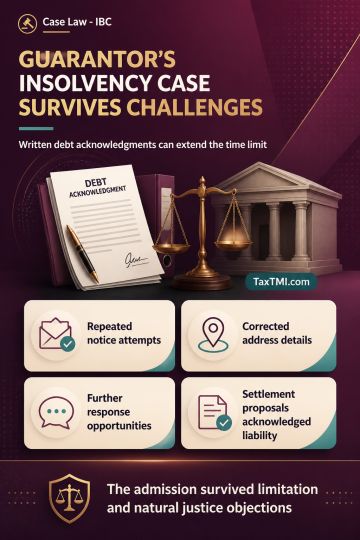
Service of notice and contractual debt acknowledgment preserved insolvency admission against a corporate guarantor despite limitation and natural just...
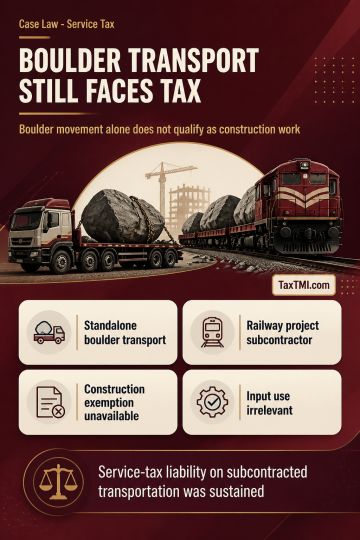
Original works exemption excludes standalone boulder transportation, leaving subcontracted railway-project transport services subject to service tax l...
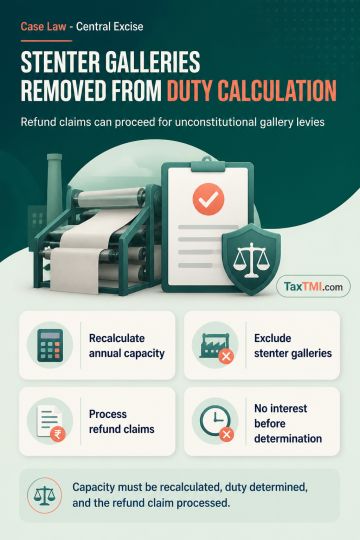
Annual production capacity determinations excluding stenter galleries support refunds for unconstitutional excise levies without an unjust-enrichment ...
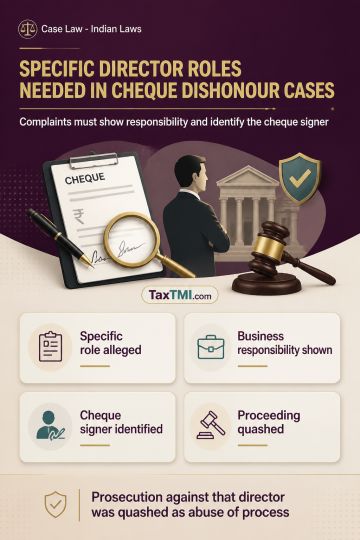
Vicarious liability for cheque dishonour requires specific allegations of responsibility and cheque signatory; generic director allegations cannot sus...
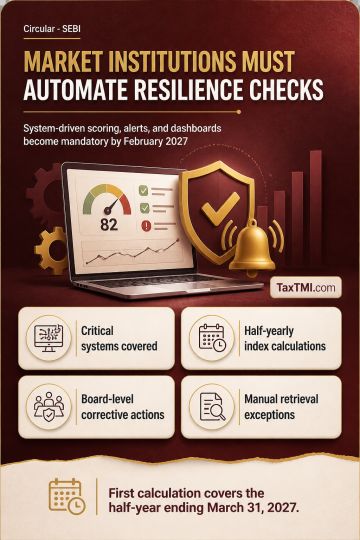
IT Resilience Index requires market infrastructure institutions to automate resilience scoring, early warnings, and continuous service-delivery monito...
Supreme Court examined the tax treatment of amounts recovered by an employer from employees as provident or ESI contributions, noting such sums are taxable as income when received. The Court explained that deduction under the employer-deduction provision is available only if the employer credits the employees' contributions to the relevant fund by the 'due date', which the Explanation defines as the date required under the applicable Act, rule, order or notification. The Court identified two conflicting interpretations: one requiring crediting by the statutory fund due date for deduction, and an alternative treating employee and employer contributions alike under the non-obstante clause permitting deduction if deposited by return due date.
Supreme Court examined the tax treatment of amounts recovered by an employer from employees as provident or ESI contributions, noting such sums are taxable as income when received. The Court explained that deduction under the employer-deduction provision is available only if the employer credits the employees' contributions to the relevant fund by the 'due date', which the Explanation defines as the date required under the applicable Act, rule, order or notification. The Court identified two conflicting interpretations: one requiring crediting by the statutory fund due date for deduction, and an alternative treating employee and employer contributions alike under the non-obstante clause permitting deduction if deposited by return due date.
Note: It is a system-generated summary and is for quick reference only.
 TaxTMI
  TaxTMI
 of 4828










 Join Channel