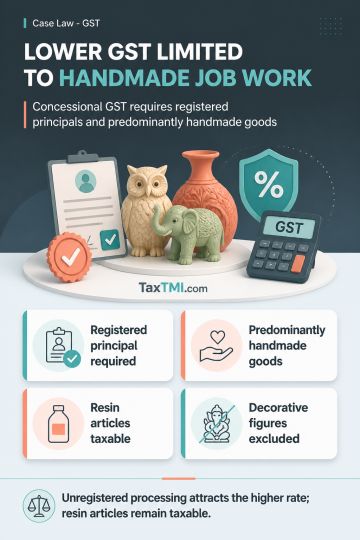
Handicraft job work receives concessional GST only for registered principals and predominantly handmade goods; commercial resin articles remain taxabl...
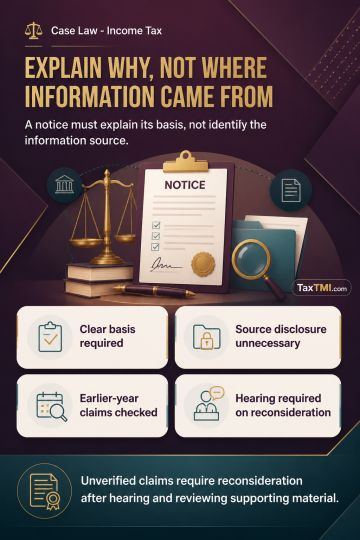
Reassessment disclosure requirements permit stated reasons without revealing information sources, but prior-taxation claims require full examination b...
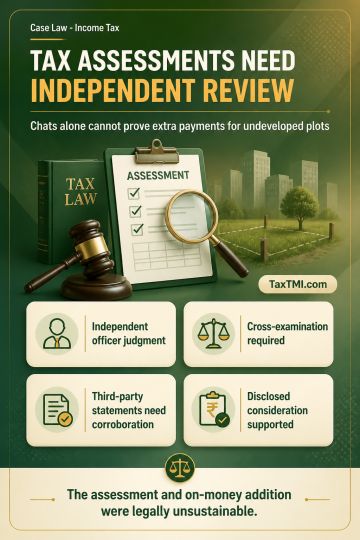
Independent assessment discretion and corroborated electronic evidence determine validity of on-money additions and undisclosed-consideration assessme...
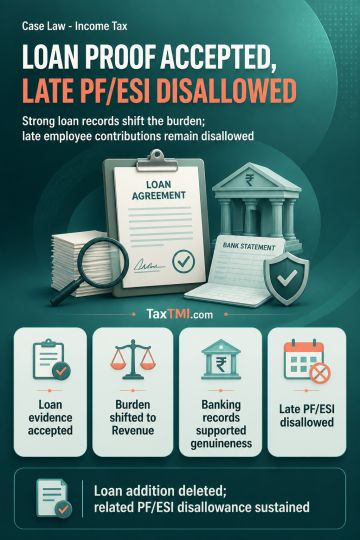
Supreme Court examined the tax treatment of amounts recovered by an employer from employees as provident or ESI contributions, noting such sums are taxable as income when received. The Court explained that deduction under the employer-deduction provision is available only if the employer credits the employees' contributions to the relevant fund by the 'due date', which the Explanation defines as the date required under the applicable Act, rule, order or notification. The Court identified two conflicting interpretations: one requiring crediting by the statutory fund due date for deduction, and an alternative treating employee and employer contributions alike under the non-obstante clause permitting deduction if deposited by return due date.
Supreme Court examined the tax treatment of amounts recovered by an employer from employees as provident or ESI contributions, noting such sums are taxable as income when received. The Court explained that deduction under the employer-deduction provision is available only if the employer credits the employees' contributions to the relevant fund by the 'due date', which the Explanation defines as the date required under the applicable Act, rule, order or notification. The Court identified two conflicting interpretations: one requiring crediting by the statutory fund due date for deduction, and an alternative treating employee and employer contributions alike under the non-obstante clause permitting deduction if deposited by return due date.
Note: It is a system-generated summary and is for quick reference only.
 TaxTMI
  TaxTMI
 of 4828





 Join Channel


