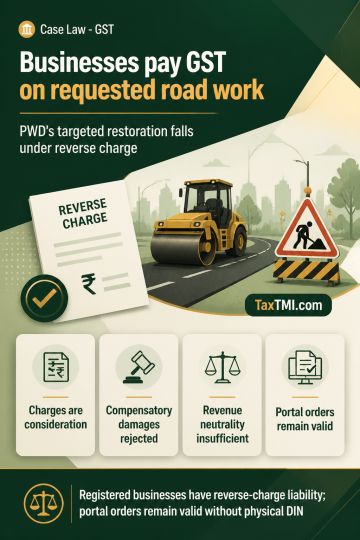
Request-driven road restoration attracts reverse-charge GST, not governmental-function treatment or compensatory-damages status for business recipient...
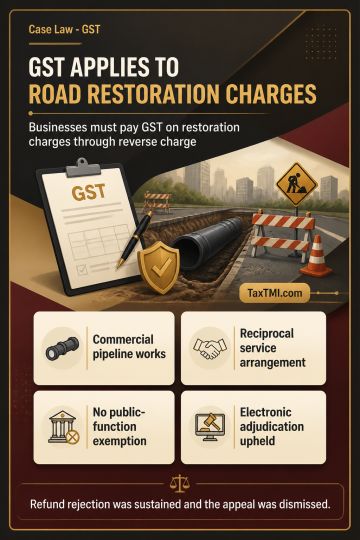
Road restoration charges for commercial pipeline works are taxable Government services, with reverse charge liability and no public-function exemption...
Model-wise import cap monitoring cannot justify withholding used multifunction machines where all-India tracking is absent and full security is furnis...
The dispute centered on whether a later order merged an earlier interim order, the scope of trustee-like powers vested in a court-constituted committee, and the comparative applicability of regulatory provision versus the Companies (Court) Rules. The court found the 2013 order to be open-ended and contingent, so the doctrine of merger did not apply. It recognised that the three-member committee was vested with trustee-like authority and that termination of the asset management company did not extinguish prior liabilities, leaving statutory authorities free to proceed. The court held Rule 9 preserves inherent court powers distinct from the regulatory provision, and dismissed the appeals.
The dispute centered on whether a later order merged an earlier interim order, the scope of trustee-like powers vested in a court-constituted committee, and the comparative applicability of regulatory provision versus the Companies (Court) Rules. The court found the 2013 order to be open-ended and contingent, so the doctrine of merger did not apply. It recognised that the three-member committee was vested with trustee-like authority and that termination of the asset management company did not extinguish prior liabilities, leaving statutory authorities free to proceed. The court held Rule 9 preserves inherent court powers distinct from the regulatory provision, and dismissed the appeals.
Note: It is a system-generated summary and is for quick reference only.
 TaxTMI
  TaxTMI
 of 4918