Penny-stock additions require transaction-specific evidence; general investigation material alone cannot establish undisclosed income or accommodation...
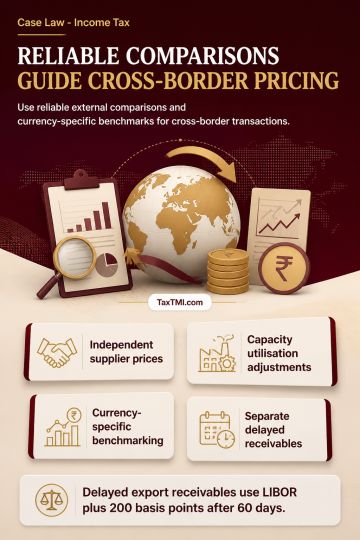
Transfer pricing comparability prioritises reliable external CUPs and foreign-currency LIBOR benchmarks for exports, borrowings and delayed receivable...
Section 153C satisfaction and seized electronic records sustained unexplained-investment addition, subject to proportionate ownership-share verificati...
Failure to discharge obligations under Regulation 17(9) raised two legal issues: whether the penalty imposed was excessive and whether security deposit could be forfeited. The Tribunal held that Regulations 8(1) and 20 fix the statutory penalty ceiling at Rs.50,000, so imposing the maximum permitted cannot be treated as disproportionate; and the CBLR does not authorize forfeiture of the security deposit. Applying those statutory prescriptions, the impugned order imposing the maximum permissible penalty and not forfeiting the deposit was found valid, and the revenue's appeal was dismissed. - CESTAT
Failure to discharge obligations under Regulation 17(9) raised two legal issues: whether the penalty imposed was excessive and whether security deposit could be forfeited. The Tribunal held that Regulations 8(1) and 20 fix the statutory penalty ceiling at Rs.50,000, so imposing the maximum permitted cannot be treated as disproportionate; and the CBLR does not authorize forfeiture of the security deposit. Applying those statutory prescriptions, the impugned order imposing the maximum permissible penalty and not forfeiting the deposit was found valid, and the revenue's appeal was dismissed. - CESTAT
Note: It is a system-generated summary and is for quick reference only.
 TaxTMI
  TaxTMI
 of 4828










 Join Channel


