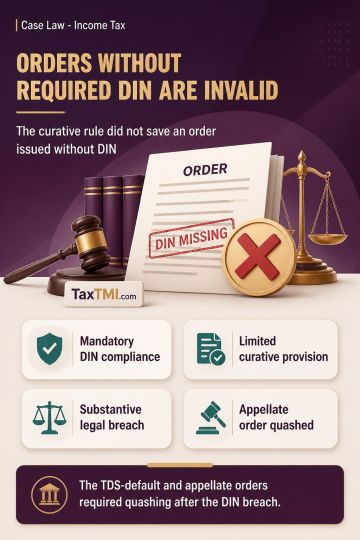
Document Identification Number compliance renders TDS-default orders invalid where mandatory DIN requirements are breached and curative provision does...
The principal issue was whether shareholders have standing to file appeals under Section 61 of the IBC and to seek remedies under Section 65 for alleged malicious proceedings. Relying on a Larger Bench precedent that shareholders possess only limited rights tied to equity investment and no independent statutory right to maintain appeals under Section 61, the Tribunal held shareholders cannot independently challenge approval of a resolution plan; consequently the appeals were dismissed as not maintainable. The Section 65 relief claimed by shareholders likewise failed for want of locus standi, and related interlocutory applications were closed. - NCLAT
The principal issue was whether shareholders have standing to file appeals under Section 61 of the IBC and to seek remedies under Section 65 for alleged malicious proceedings. Relying on a Larger Bench precedent that shareholders possess only limited rights tied to equity investment and no independent statutory right to maintain appeals under Section 61, the Tribunal held shareholders cannot independently challenge approval of a resolution plan; consequently the appeals were dismissed as not maintainable. The Section 65 relief claimed by shareholders likewise failed for want of locus standi, and related interlocutory applications were closed. - NCLAT
Note: It is a system-generated summary and is for quick reference only.
 TaxTMI
  TaxTMI
 of 4918