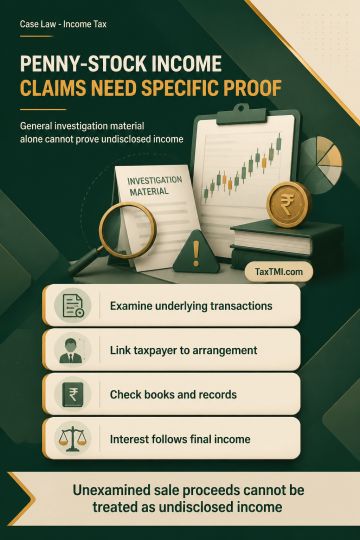
Penny-stock additions require transaction-specific evidence; general investigation material alone cannot establish undisclosed income or accommodation...
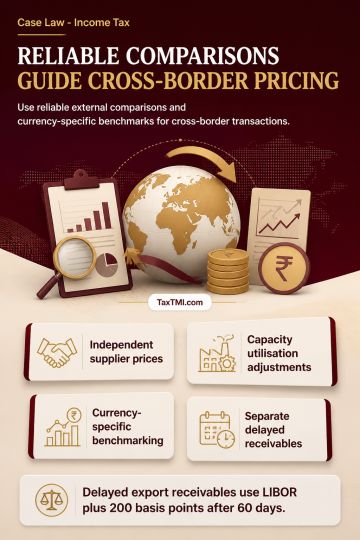
Transfer pricing comparability prioritises reliable external CUPs and foreign-currency LIBOR benchmarks for exports, borrowings and delayed receivable...
Section 153C satisfaction and seized electronic records sustained unexplained-investment addition, subject to proportionate ownership-share verificati...
The dominant issue was whether the service agreements between regulated lenders and fintech service providers constituted proceeds of scheduled offences and unlawful outsourcing of core banking functions. The tribunal found that the co-lending structure, disguised as "performance guarantees" and revenue-sharing (service fees/minimum commitments), yielded guaranteed returns to lenders without capital deployment, and effectively outsourced core lending activities (loan sanctioning, KYC compliance and borrower management) in breach of RBI master directions; misuse of borrower data facilitated offences under IPC and IT Act. Consequence: contractual arrangements were treated as tainted and the appeal was dismissed. - AT
The dominant issue was whether the service agreements between regulated lenders and fintech service providers constituted proceeds of scheduled offences and unlawful outsourcing of core banking functions. The tribunal found that the co-lending structure, disguised as "performance guarantees" and revenue-sharing (service fees/minimum commitments), yielded guaranteed returns to lenders without capital deployment, and effectively outsourced core lending activities (loan sanctioning, KYC compliance and borrower management) in breach of RBI master directions; misuse of borrower data facilitated offences under IPC and IT Act. Consequence: contractual arrangements were treated as tainted and the appeal was dismissed. - AT
Note: It is a system-generated summary and is for quick reference only.
 TaxTMI
  TaxTMI
 of 4828










 Join Channel


