Educational approval requires mandatory State registration, but incidental surplus and trustee-owned land do not prove private benefit or profit motiv...
Judicial review of settlement orders cannot reopen settled customs notices, while statutory interest remains subject to verification and quantificatio...
Customs Broker licence lending for consideration justified revocation where exporter authorisation and client verification obligations were also breac...
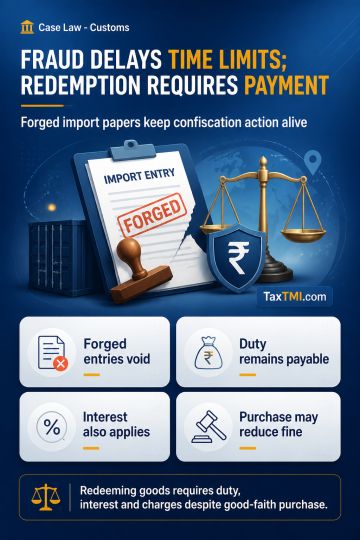
Fraudulent import documents suspend limitation protection, while redemption of confiscated goods requires duty and interest despite bona fide purchase...
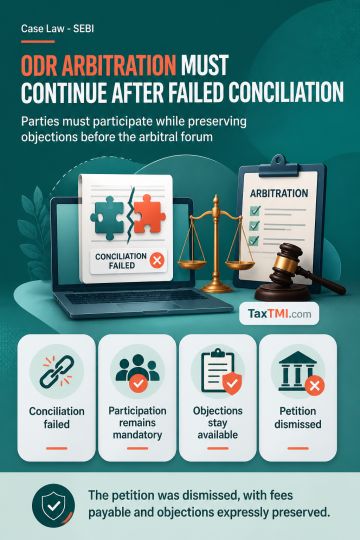
ODR arbitration participation remains mandatory after failed conciliation, while jurisdictional and maintainability objections stay available before t...
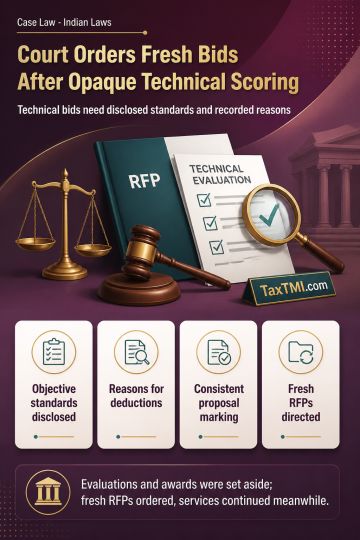
Transparency in technical bid evaluation requires disclosed standards and recorded reasons; opaque scoring invalidated tender awards and required fres...
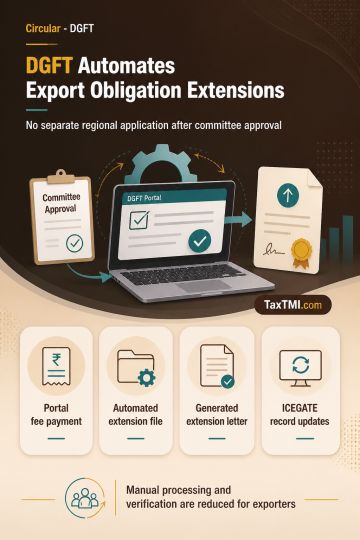
Automated export obligation extensions remove separate regional applications after committee approval for Advance Authorisation and EPCG authorisation...
Page of 4828
Press 'Enter' after typing page number.
441 to 460 of 96556 Results
❮
❯
❯❯
0 / 200
Expand Note
Add to Folder
No Folders have been created
+
Are you sure you want to delete "My most important" ?
The instrument revises the technical-glitch framework: it...
Broker trading-system "technical glitch" redefinition and narrowed incident-reporting regime for large IBT/STWT brokers requiring 2-hr notice and 14-working-day RCA
Contents
Summary
Note
Bookmark
Share
✓ Copied successfully !
Print
Print Options
For full text, please login
Login to TaxTMI
Verification Pending
The Email Id has not been verified. Click on the link we have sent on
The instrument revises the technical-glitch framework: it redefines "technical glitch" to mean broker-system malfunctions impacting trading/risk functions for ≥5 contiguous minutes and excludes specified external or non-trading/back-office issues, thereby narrowing reportable events. It limits applicability to brokers operating IBT/STWT platforms with >10,000 active clients, thereby excluding smaller brokers from the regime. It prescribes streamlined reporting - notify exchange and clients within 2 hours, file a preliminary incident report by T+1 (next trading day if holiday) and an RCA within 14 working days via a Common Reporting Platform - thereby standardizing timelines and submission. It rationalizes capacity-planning, software-testing, BCP/DRS and financial disincentives by broker size, mandates exchanges to issue detailed guidelines and publish incidents, and supersedes the earlier circular; effective January 9, 2026.
The instrument revises the technical-glitch framework: it redefines "technical glitch" to mean broker-system malfunctions impacting trading/risk functions for ≥5 contiguous minutes and excludes specified external or non-trading/back-office issues, thereby narrowing reportable events. It limits applicability to brokers operating IBT/STWT platforms with >10,000 active clients, thereby excluding smaller brokers from the regime. It prescribes streamlined reporting - notify exchange and clients within 2 hours, file a preliminary incident report by T+1 (next trading day if holiday) and an RCA within 14 working days via a Common Reporting Platform - thereby standardizing timelines and submission. It rationalizes capacity-planning, software-testing, BCP/DRS and financial disincentives by broker size, mandates exchanges to issue detailed guidelines and publish incidents, and supersedes the earlier circular; effective January 9, 2026.
Note: It is a system-generated summary and is for quick reference only.
 TaxTMI
  TaxTMI
 of 4828














 Join Channel