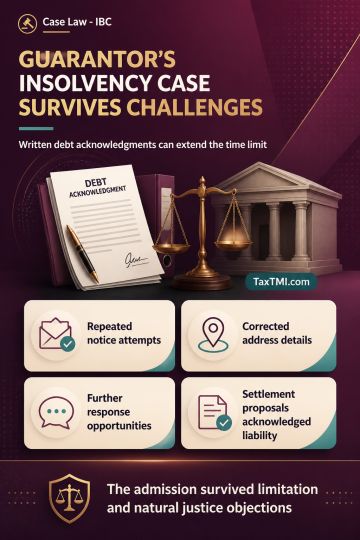
Service of notice and contractual debt acknowledgment preserved insolvency admission against a corporate guarantor despite limitation and natural just...
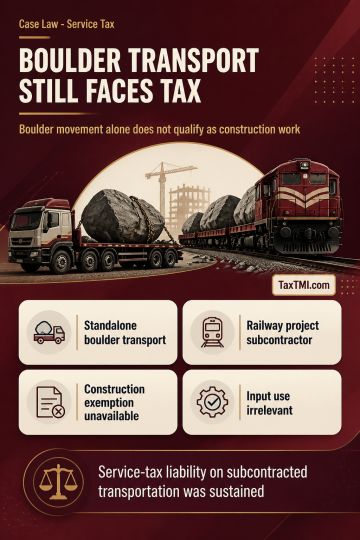
Original works exemption excludes standalone boulder transportation, leaving subcontracted railway-project transport services subject to service tax l...
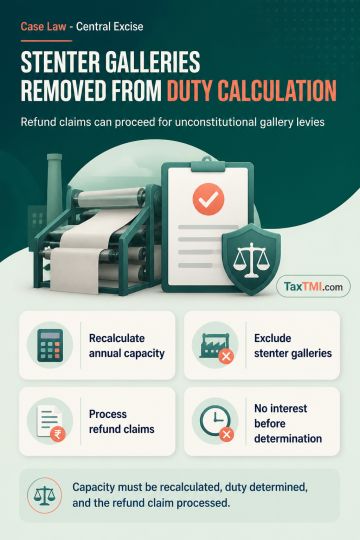
Annual production capacity determinations excluding stenter galleries support refunds for unconstitutional excise levies without an unjust-enrichment ...
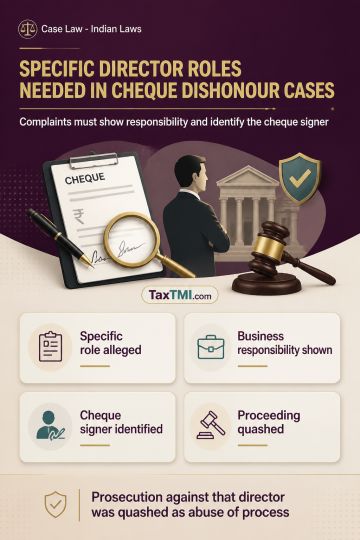
Vicarious liability for cheque dishonour requires specific allegations of responsibility and cheque signatory; generic director allegations cannot sus...
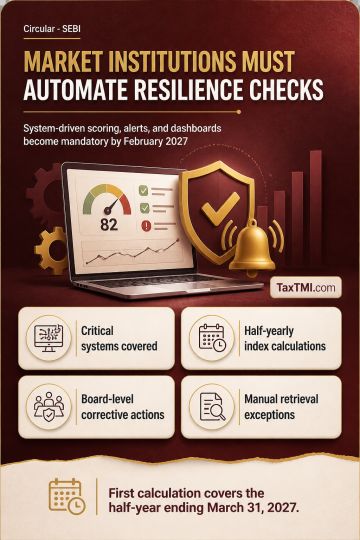
IT Resilience Index requires market infrastructure institutions to automate resilience scoring, early warnings, and continuous service-delivery monito...
Disallowance under s.14A r.w. Rule 8D(2)(ii) was held impermissible because the assessee established availability of surplus own funds for making investments yielding exempt income; hence no interest disallowance could be attributed to such investments, and the disallowance was deleted. Disallowance under Rule 8D(2)(iii) was held untenable absent the AO's recorded objective satisfaction, as mandated by s.14A and settled law; the direction to recompute based on proper satisfaction was sustained. Sales tax and power subsidies were treated as capital receipts since the dominant purpose was industrial development and employment generation; addition to book profit u/s 115JB was rejected. Additional depreciation and bad-debt write-off/provision treatment (including under MAT) were allowed, and carry-forward of amalgamating company's LTC loss was upheld per the approved amalgamation scheme, resulting in dismissal of Revenue's grounds and partial dismissal of assessee's appeal. - ITAT
Disallowance under s.14A r.w. Rule 8D(2)(ii) was held impermissible because the assessee established availability of surplus own funds for making investments yielding exempt income; hence no interest disallowance could be attributed to such investments, and the disallowance was deleted. Disallowance under Rule 8D(2)(iii) was held untenable absent the AO's recorded objective satisfaction, as mandated by s.14A and settled law; the direction to recompute based on proper satisfaction was sustained. Sales tax and power subsidies were treated as capital receipts since the dominant purpose was industrial development and employment generation; addition to book profit u/s 115JB was rejected. Additional depreciation and bad-debt write-off/provision treatment (including under MAT) were allowed, and carry-forward of amalgamating company's LTC loss was upheld per the approved amalgamation scheme, resulting in dismissal of Revenue's grounds and partial dismissal of assessee's appeal. - ITAT
Note: It is a system-generated summary and is for quick reference only.
 TaxTMI
  TaxTMI
 of 4828




 Join Channel