Loading...

Top
Help
×

By creating an account you can:

Logo TaxTMI
Call Us / Help / Feedback

Contact Us At :

E-mail: [email protected]

Call / WhatsApp at: +91 99117 96707

For more information, Check Contact Us

FAQs :

To know Frequently Asked Questions, Check FAQs

Most Asked Video Tutorials :

For more tutorials, Check Video Tutorials

Submit Feedback/Suggestion :

Email :
Please provide your email address so we can follow up on your feedback.
Category :
Description :
Min 15 characters 0/2000
Make Most of Text Search
  1. Checkout this video tutorial: How to search effectively on TaxTMI.
  2. Put words in double quotes for exact word search, eg: "income tax"
  3. Avoid noise words such as : 'and, of, the, a'
  4. Sort by Relevance to get the most relevant document.
  5. Press Enter to add multiple terms/multiple phrases, and then click on Search to Search.
  6. Text Search
  7. The system will try to fetch results that contains ALL your words.
  8. Once you add keywords, you'll see a new 'Search In' filter that makes your results even more precise.
  9. Text Search
Add to...
You have not created any category. Kindly create one to bookmark this item!
Create New Category
Hide
Title :
Description :
❮❮ Hide
Default View
Expand ❯❯
Close ✕
🔎 Highlights - Adv. Search
TEXT SEARCH:

Press 'Enter' to add multiple search terms. Rules for Better Search

Search In:
Main Text + AI Text
  • Main Text
  • Main Text + AI Text
  • AI Text
Law:
---- All Laws----
  • ---- All Laws----
  • Income Tax
  • Direct Taxes
  • Benami Property
  • Central GST Laws
  • SGST - State GST Laws
  • Customs
  • FTP - Foreign Trade Policy
  • SEZ - Special Economic Zone
  • FEMA - Foreign Exchange Management
  • Companies Law
  • SEBI - Securities & Exchange Board of India
  • IBC - Insolvency and Bankruptcy
  • Law of Competition
  • PMLA - Money-Laundering
  • Indian Laws
  • Bill / Finance Bills
  • Wealth Tax
  • Service Tax
  • Central Excise
  • VAT / Sales Tax
Month:
---- All Months ----
  • ---- All Months ----
  • January
  • February
  • March
  • April
  • May
  • June
  • July
  • August
  • September
  • October
  • November
  • December
Year:
---- All Years ----
  • ---- All Years ----
  • 2026
  • 2025
  • 2024
  • 2023
  • 2022
  • 2021
  • 2020
  • 2019
  • 2018
  • 2017
  • 2016
  • 2015
  • 2014
  • 2013
  • 2012
  • 2011
Sort By: ?
In Sort By 'Default', exact matches for text search are shown at the top, followed by the remaining results in their regular order.
Relevance Default Date
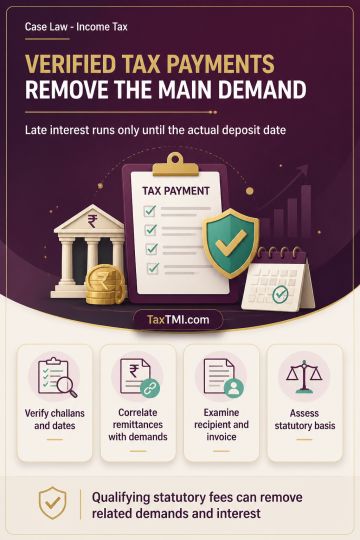
    Subsequent TDS remittance removes verified principal liability, while delayed-payment interest runs only until the actual deposit date.
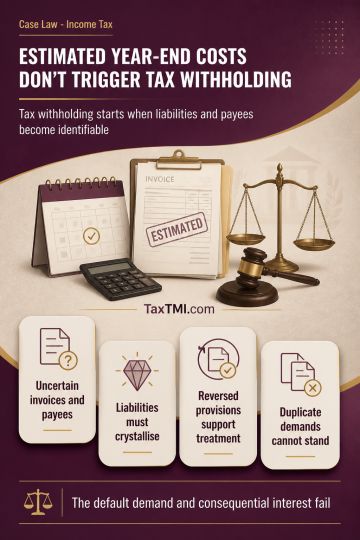
    Year-end estimated provisions do not trigger TDS until an identifiable payee and crystallised liability exist, defeating default demands.
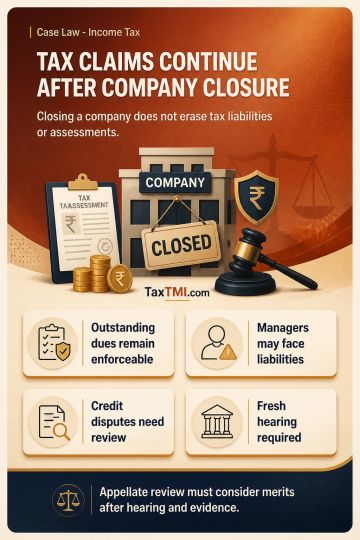
    Struck-off company assessments remain valid for tax liabilities, while unexplained-credit disputes require merits adjudication after a hearing.
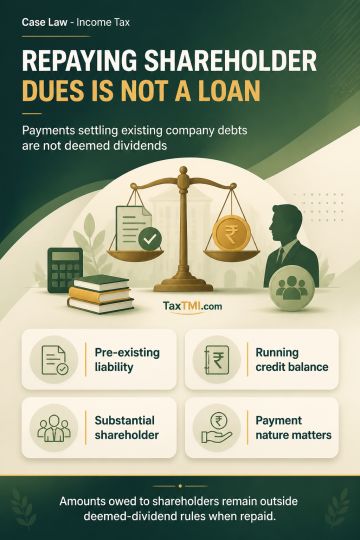
    Deemed dividend requires a genuine shareholder loan or advance; repayment of a company liability falls outside the provision.
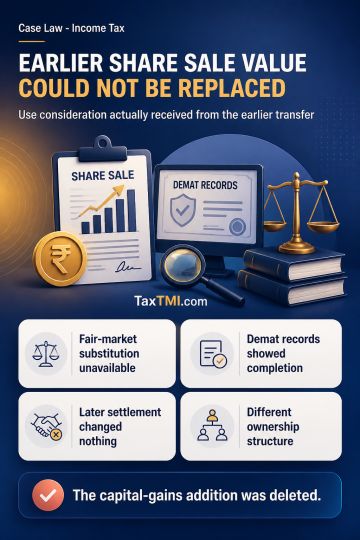
    Capital-gains consideration for unquoted share transfers cannot be replaced with a later transaction's value without statutory basis.
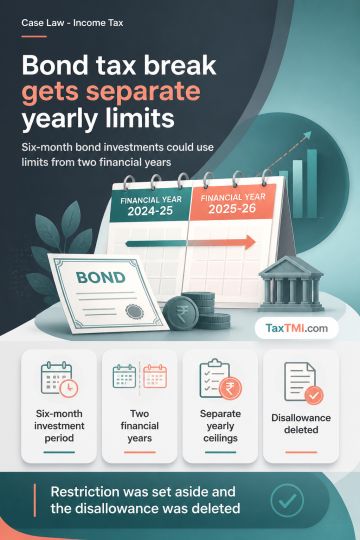
    Capital-gains bond exemption applies separate financial-year limits when the six-month investment period spans two years.
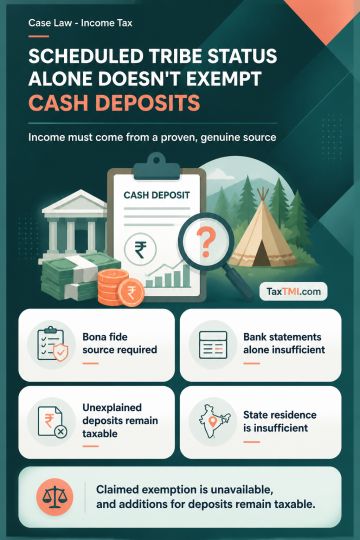
    Scheduled Tribe income exemption requires proof of a bona fide source, excluding unexplained cash deposits.
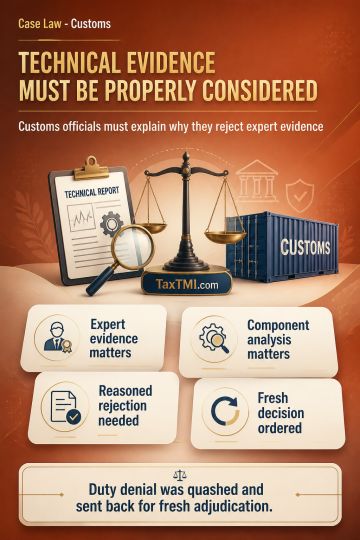
    Technical expert evidence in customs classification must receive reasoned evaluation; denial of concession was quashed and remanded.
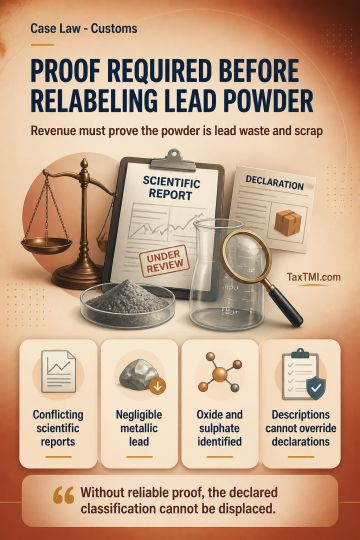
    Burden of proof for reclassification prevents lead-bearing powder from being treated as lead waste and scrap without conclusive scientific evidence.
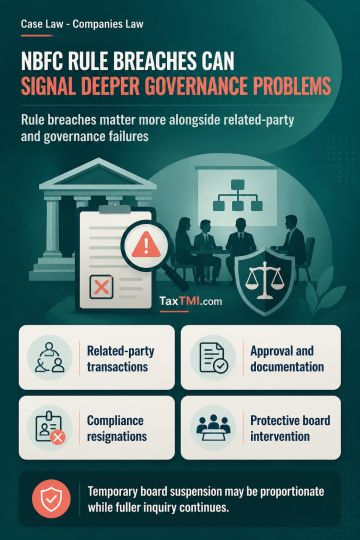
    NBFC prudential-norm breaches may support oppression and mismanagement claims when combined with related-party dealings and governance failures.
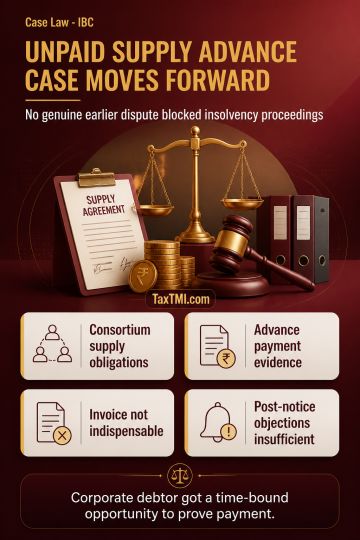
    Operational debt from consortium supply advances survives where no genuine pre-existing dispute predates the insolvency demand notice.
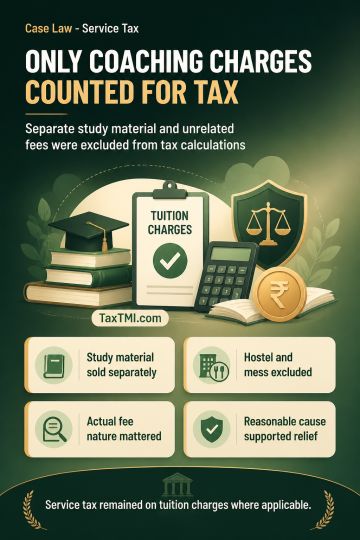
    Nexus to coaching service excludes separately supplied study material, hostel, mess and unrelated ancillary collections from taxable value.
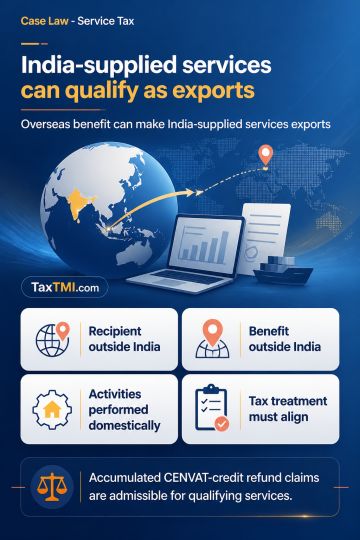
    Consistent Revenue positions on export status require CENVAT refunds for qualifying foreign-recipient business services supplied from India.
    Comparable-service valuation requires similarly placed recipients; new-buyer sale prices cannot value redevelopment allotments to existing occupants.
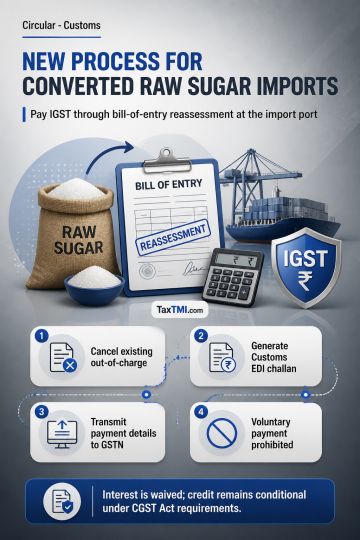
    IGST payment on converted raw sugar imports requires bill-of-entry reassessment, Customs EDI payment, and GSTN-linked credit processing.
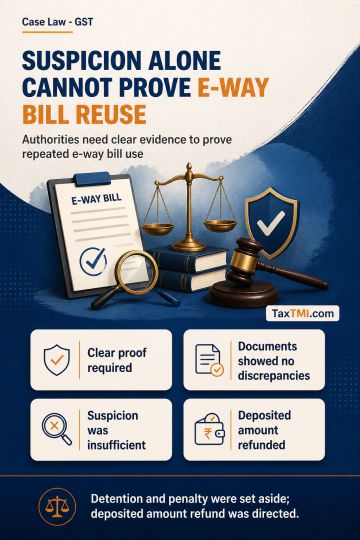
    E-way bill reuse allegations require cogent evidence; suspicion alone cannot establish GST contravention or intention to evade tax.
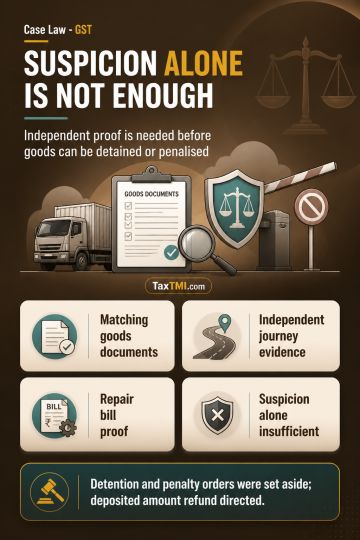
    E-way bill reuse allegations require independent proof; suspicion alone cannot sustain goods detention or tax-evasion penalties.
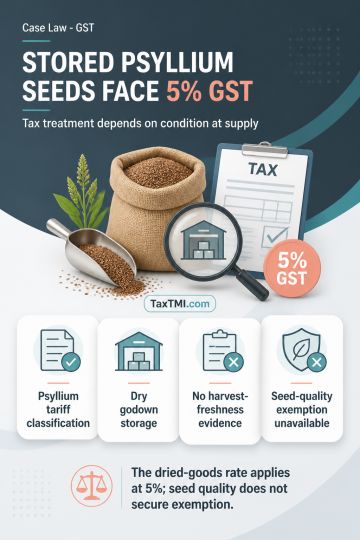
    Psyllium seed classification turns on condition at supply, making dried stored seeds taxable rather than GST-exempt fresh goods.
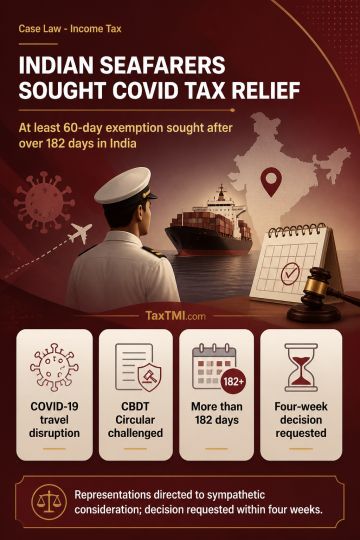
    Tax residency relief for Indian seafarers during COVID-19 was sought through a challenge to administrative guidance.
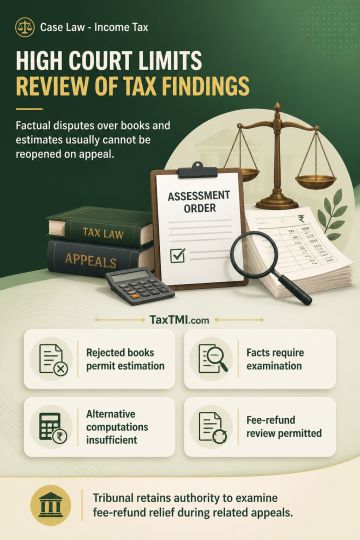
    Section 260A Fact-Finding Limits Bar Reassessment of Book Rejection, Income Estimates, and Fee-Refund Relief on Appeal
❯❯
Maximize Maximize Maximize
0 / 200
Expand Note
Add to Folder

No Folders have been created

+

Are you sure you want to delete "My most important" ?

NOTE:

Highlights
Showing Results for :
Reset Filters
Results Found:
Show All Summaries Hide All Summaries

Highlights

Back

All Highlights

Showing Results for :
Reset Filters
No Records Found

Highlights

Back

All Highlights

whatsapp Join Channel
Showing Results for : Reset Filters

Operational creditor sought admission of a s.9 application based...

Time-barred invoice payments claimed via ledger and journal entries; held no valid acknowledgment, insolvency plea dismissed.

Contents
Summary
Note

Note

-

Bookmark

Print

Print

IBC January 12, 2026 Case Laws AT
Operational creditor sought admission of a s.9 application based on invoices, relying on book adjustments and ledger entries to extend limitation and meet the threshold. The tribunal held that any acknowledgement after expiry of the three-year limitation is ineffective, and a journal entry merely transferring historic liabilities between units does not constitute a valid acknowledgement under s.18 nor revive time-barred invoices. A signed balance/ledger confirmation, being ambiguous and lacking an express promise to pay, did not attract s.25(3) of the Contract Act to create a fresh obligation, and interest was disallowed absent contractual terms. Consequently, the operational debt remained time-barred and the threshold finding stood; the appeal was dismissed. - NCLAT

Topics

Acts Income Tax