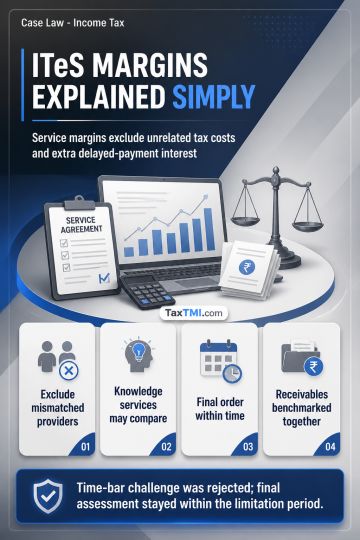
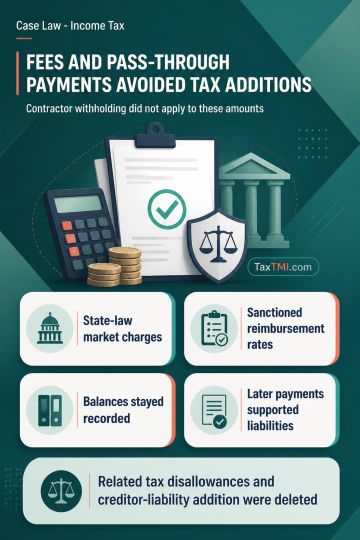
Transfer-pricing treatment of ITeS margins excludes pass-through tax recoveries and separate delayed-receivables interest after working-capital adjust...
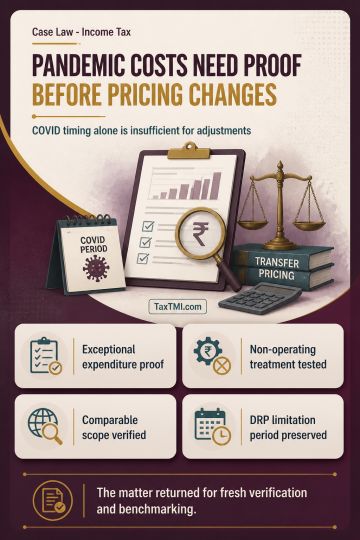
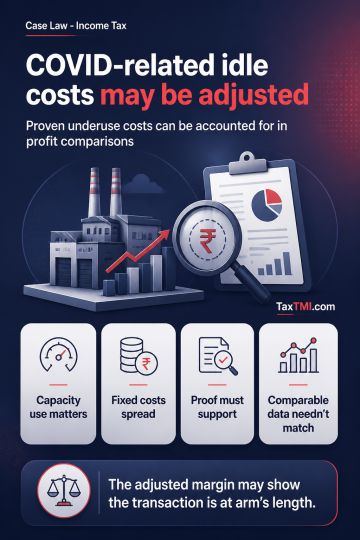
Capacity-utilisation adjustments under TNMM can neutralise substantiated COVID-related idle costs where underutilisation materially affects profitabil...
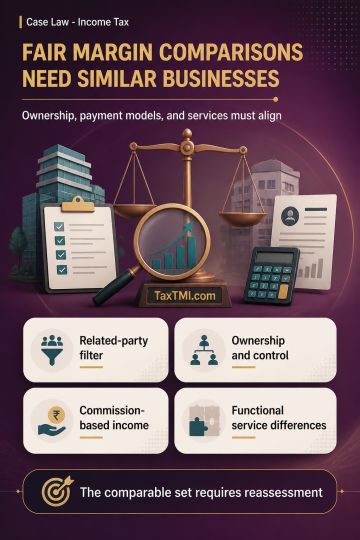
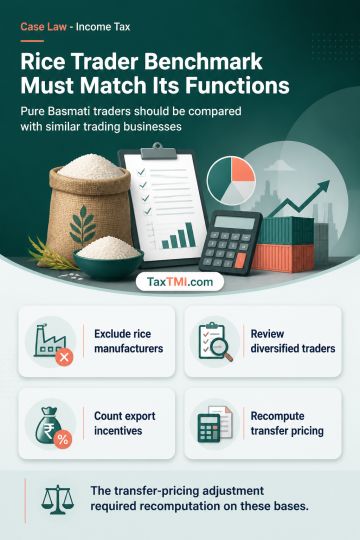
TNMM functional comparability requires excluding rice manufacturers from a pure Basmati rice trader's benchmark and recognising operating export recei...
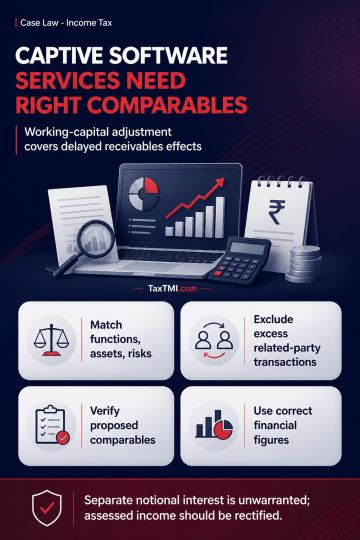
Working-capital adjustment subsumes delayed-receivable effects in TNMM benchmarking of captive software-development services, avoiding separate notion...
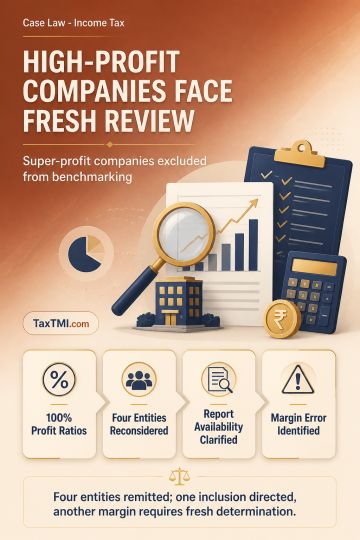
Transfer-pricing comparability requires exclusion of financially illogical super-profit comparables and correction of unsupported annual-report and ma...
Charitable character assessment preserves Section 80G approval despite inclusive spiritual teachings and incidental religious expenditure within the s...
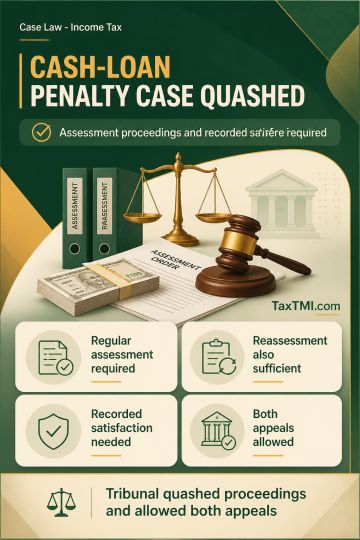
Penalty proceedings for cash-loan acceptance require assessment proceedings and recorded Assessing Officer satisfaction; absent these, the proceedings...
Page of 4828
Press 'Enter' after typing page number.
161 to 180 of 96556 Results
❮
❯
❯❯
0 / 200
Expand Note
Add to Folder
No Folders have been created
+
Are you sure you want to delete "My most important" ?
Section 47(vii) exemption was held confined to transfers of capital assets on amalgamation and inapplicable where the assessee's shares in the amalgamating company were held as stock-in-trade; in such cases, taxability is governed by Section 28 as business income. For Section 28, mere sanction/appointed date does not trigger charge; the taxable event arises only on actual allotment of new shares, and only if the substituted shares confer a real, presently realisable commercial benefit with ascertainable value. Whether the shares were stock-in-trade or investment, and whether the allotted shares were freely realisable/subject to restrictions, was treated as fact-dependent with burden on Revenue; matter was remitted to the Tribunal, while the legal principle was decided in Revenue's favour and the HC judgment affirmed. - SC
Section 47(vii) exemption was held confined to transfers of capital assets on amalgamation and inapplicable where the assessee's shares in the amalgamating company were held as stock-in-trade; in such cases, taxability is governed by Section 28 as business income. For Section 28, mere sanction/appointed date does not trigger charge; the taxable event arises only on actual allotment of new shares, and only if the substituted shares confer a real, presently realisable commercial benefit with ascertainable value. Whether the shares were stock-in-trade or investment, and whether the allotted shares were freely realisable/subject to restrictions, was treated as fact-dependent with burden on Revenue; matter was remitted to the Tribunal, while the legal principle was decided in Revenue's favour and the HC judgment affirmed. - SC
Note: It is a system-generated summary and is for quick reference only.
 TaxTMI
  TaxTMI
 of 4828





 Join Channel