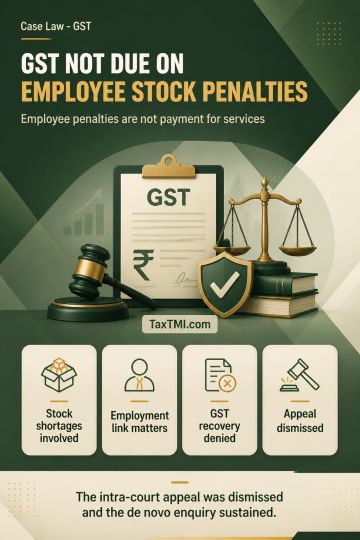
Employee stock-shortage penalties do not constitute consideration for services, preventing GST collection under Schedule II in employment relationship...
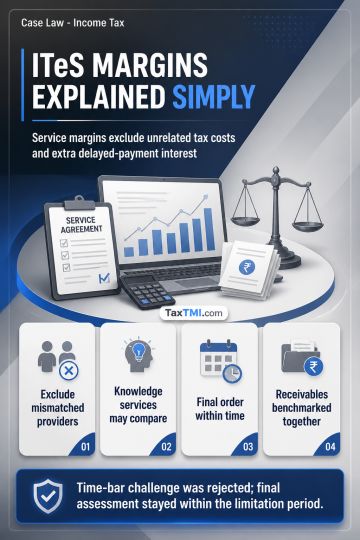
Transfer-pricing treatment of ITeS margins excludes pass-through tax recoveries and separate delayed-receivables interest after working-capital adjust...
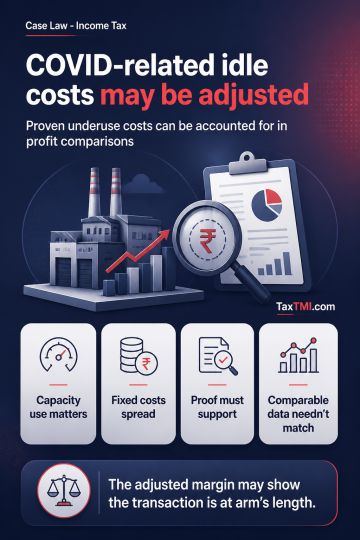
Capacity-utilisation adjustments under TNMM can neutralise substantiated COVID-related idle costs where underutilisation materially affects profitabil...
Page of 4830
Press 'Enter' after typing page number.
181 to 200 of 96587 Results
❮
❯
❯❯
0 / 200
Expand Note
Add to Folder
No Folders have been created
+
Are you sure you want to delete "My most important" ?
A party instituted a civil declaratory suit challenging initiation of CIRP, disputing existence of a legally enforceable debt and alleging fraud/forgery in documents including an assignment deed, while seeking to bypass the IBC framework. The Court held that although the NCLT, while admitting a Section 7 application, cannot adjudicate pre-existing disputes about the debt, the IBC vests the NCLT with jurisdiction under Sections 65, 75 and 60(5)(c) read with the NCLT Rules to examine fraud, collusion, and veracity of documents, with consequences extending to continuation of CIRP. The civil suit was an impermissible collateral attack barred by IBC ouster provisions; the plaint was rejected under Order VII Rule 11 CPC - HC
A party instituted a civil declaratory suit challenging initiation of CIRP, disputing existence of a legally enforceable debt and alleging fraud/forgery in documents including an assignment deed, while seeking to bypass the IBC framework. The Court held that although the NCLT, while admitting a Section 7 application, cannot adjudicate pre-existing disputes about the debt, the IBC vests the NCLT with jurisdiction under Sections 65, 75 and 60(5)(c) read with the NCLT Rules to examine fraud, collusion, and veracity of documents, with consequences extending to continuation of CIRP. The civil suit was an impermissible collateral attack barred by IBC ouster provisions; the plaint was rejected under Order VII Rule 11 CPC - HC
Note: It is a system-generated summary and is for quick reference only.
 TaxTMI
  TaxTMI
 of 4830



 Join Channel


