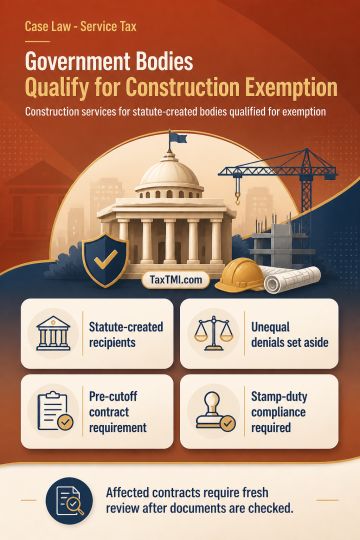
Governmental authority status supports construction-service exemption, while pre-cutoff contract and stamp-duty compliance requires verification on re...
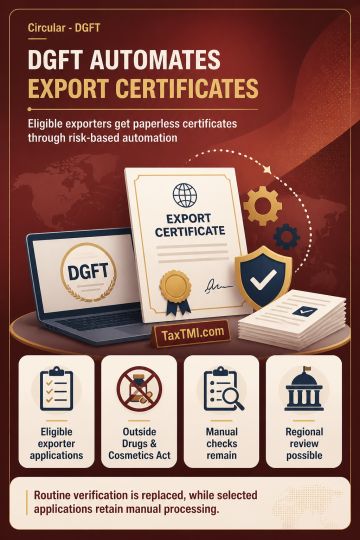
Automated Free Sale and Commerce Certificates enable paperless processing while retaining risk-based manual verification for selected exporter applica...
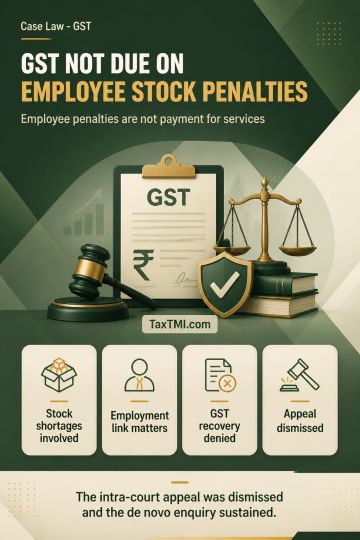
Employee stock-shortage penalties do not constitute consideration for services, preventing GST collection under Schedule II in employment relationship...
The dominant issue was whether Central Sales Tax dues constituted a secured debt by creation of a statutory first charge on the corporate debtor's assets under Section 9(2) of the CST Act read with the State VAT first-charge provision. Section 9(2) was held to be a machinery provision enabling State authorities to assess, collect, and recover CST dues using State sales tax procedures and powers, but it does not confer substantive rights or create any statutory charge. Since the CST Act lacks an express first-charge provision akin to Section 48 of the State VAT law, no security interest could be implied for CST dues. Accordingly, CST dues were not treated as secured, and the challenge failed - NCLAT
The dominant issue was whether Central Sales Tax dues constituted a secured debt by creation of a statutory first charge on the corporate debtor's assets under Section 9(2) of the CST Act read with the State VAT first-charge provision. Section 9(2) was held to be a machinery provision enabling State authorities to assess, collect, and recover CST dues using State sales tax procedures and powers, but it does not confer substantive rights or create any statutory charge. Since the CST Act lacks an express first-charge provision akin to Section 48 of the State VAT law, no security interest could be implied for CST dues. Accordingly, CST dues were not treated as secured, and the challenge failed - NCLAT
Note: It is a system-generated summary and is for quick reference only.
 TaxTMI
  TaxTMI
 of 4827



 Join Channel


