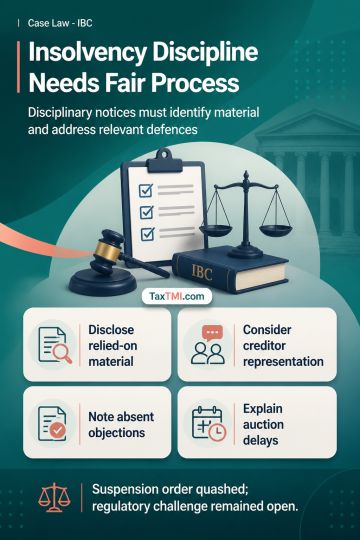
Natural justice in insolvency-professional discipline requires disclosed material; notices based on extraneous material and ignored defences are vitia...
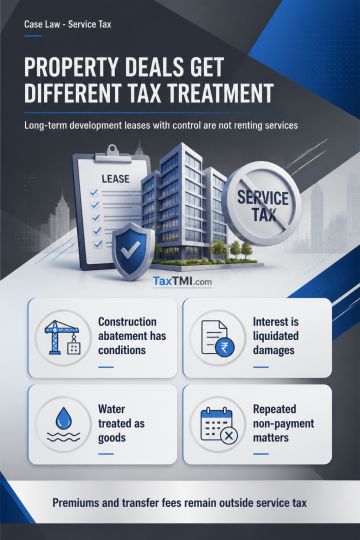
Development rights transfers treated as immovable property, while construction abatement applies and repeated non-payment permits extended service-tax...
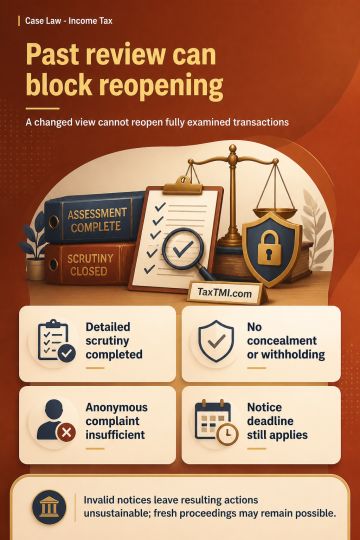
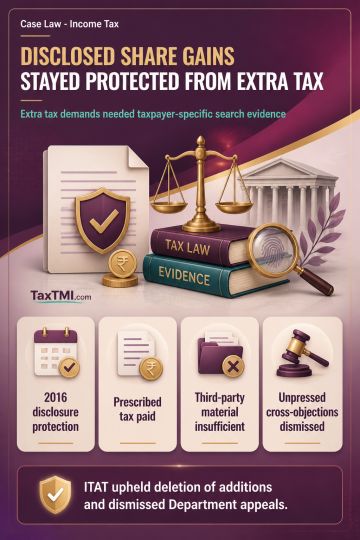
Income Disclosure Scheme immunity and search-material requirements barred further share-transaction additions in unabated assessments under section 15...
The dominant issue was whether Central Sales Tax dues constituted a secured debt by creation of a statutory first charge on the corporate debtor's assets under Section 9(2) of the CST Act read with the State VAT first-charge provision. Section 9(2) was held to be a machinery provision enabling State authorities to assess, collect, and recover CST dues using State sales tax procedures and powers, but it does not confer substantive rights or create any statutory charge. Since the CST Act lacks an express first-charge provision akin to Section 48 of the State VAT law, no security interest could be implied for CST dues. Accordingly, CST dues were not treated as secured, and the challenge failed - NCLAT
The dominant issue was whether Central Sales Tax dues constituted a secured debt by creation of a statutory first charge on the corporate debtor's assets under Section 9(2) of the CST Act read with the State VAT first-charge provision. Section 9(2) was held to be a machinery provision enabling State authorities to assess, collect, and recover CST dues using State sales tax procedures and powers, but it does not confer substantive rights or create any statutory charge. Since the CST Act lacks an express first-charge provision akin to Section 48 of the State VAT law, no security interest could be implied for CST dues. Accordingly, CST dues were not treated as secured, and the challenge failed - NCLAT
Note: It is a system-generated summary and is for quick reference only.
 TaxTMI
  TaxTMI
 of 4828





 Join Channel