Prolonged sterilisation of development rights supports capital-gains treatment, while business-income disallowances cannot govern capital-gains comput...
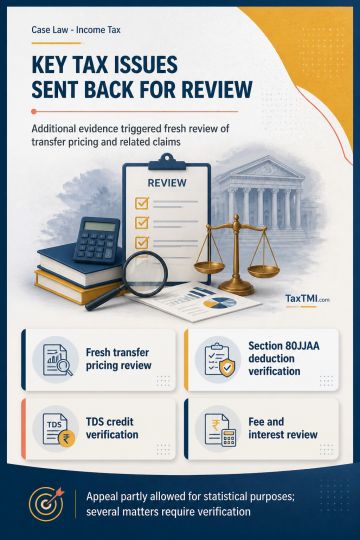
Additional evidence in transfer pricing dispute leads to fresh examination, while tax deductions, TDS credit, fee and refund interest require verifica...
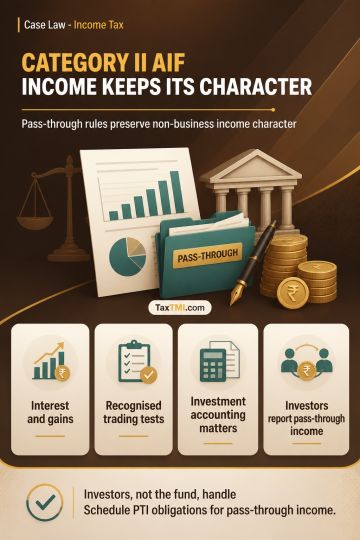
Category II AIF pass-through taxation preserves non-business income character; investment receipts cannot be reclassified without applying recognised ...
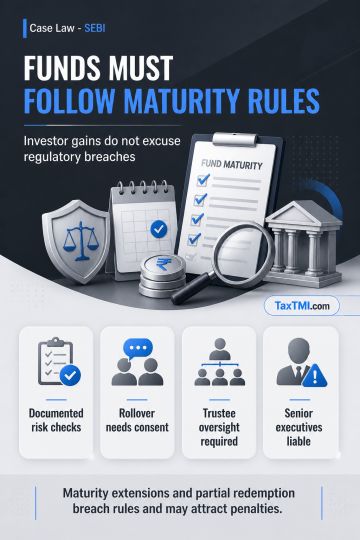
Mutual fund maturity rules require proper rollover, redemption, disclosure, and due diligence; investor gains cannot excuse regulatory breaches or pen...
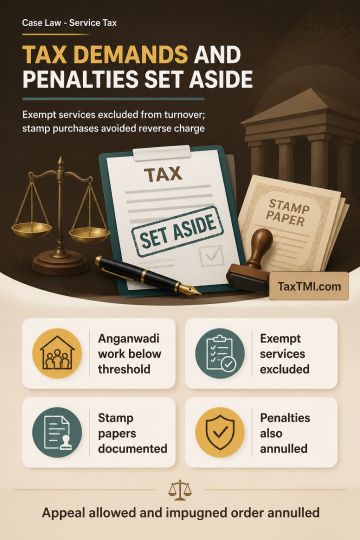
Threshold exemption excludes exempt services, while stamp-paper purchases avoid reverse charge; consequential service tax penalties were also set asid...
Business loss was disallowed on the premise that it was not genuine; applying s.28, the forum held that real revenue losses incidental to trade are deductible unless expressly barred, and found the disallowance conjectural and contrary to settled law, directing allowance of the loss in full. ESOP cross-charge was treated as notional; relying on prior year orders and the principle that "expenditure" under s.37 includes such employee compensation cost, the deduction for ESOP expense was allowed. Reimbursement of ESOP cost to the parent was held not to be consideration for services and made cost-to-cost; hence no TDS obligation arose under s.195 and the revenue's challenge failed. Manpower expenses were supported by contracts, invoices, statutory records and banking/TDS trail; later non-traceability of a vendor was insufficient absent evidence of cash-back, so the addition was deleted. - ITAT
Business loss was disallowed on the premise that it was not genuine; applying s.28, the forum held that real revenue losses incidental to trade are deductible unless expressly barred, and found the disallowance conjectural and contrary to settled law, directing allowance of the loss in full. ESOP cross-charge was treated as notional; relying on prior year orders and the principle that "expenditure" under s.37 includes such employee compensation cost, the deduction for ESOP expense was allowed. Reimbursement of ESOP cost to the parent was held not to be consideration for services and made cost-to-cost; hence no TDS obligation arose under s.195 and the revenue's challenge failed. Manpower expenses were supported by contracts, invoices, statutory records and banking/TDS trail; later non-traceability of a vendor was insufficient absent evidence of cash-back, so the addition was deleted. - ITAT
Note: It is a system-generated summary and is for quick reference only.
 TaxTMI
 of 4805






 Join Channel


 TaxTMI
