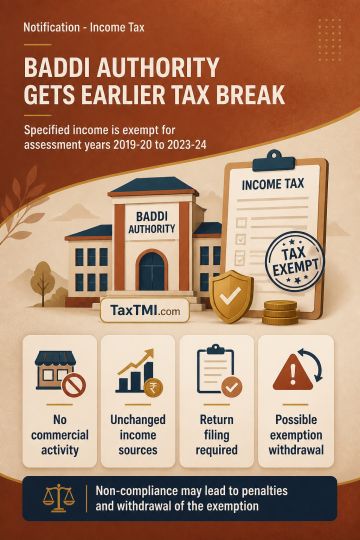
Specified development authority income receives retrospective tax exemption, subject to non-commercial activity, unchanged income sources, and return-...
Unified Brand India framework introduces voluntary Trust Mark certification and funding support for export branding, packaging and global promotional ...
Origin Declaration authentication governs preferential tariff claims under India-UK CETA, requiring a validated reference number before import clearan...
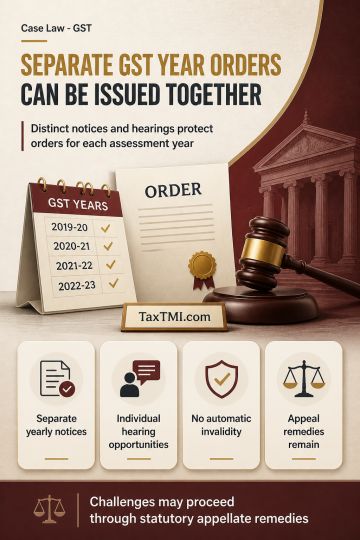
Separate assessment orders for different years remain valid when distinct notices and hearing opportunities prevent prejudice from combined proceeding...
Defined public benefit can retain charitable character; registration renewal requires examining genuine activities and legal compliance, not surplus a...
Capital reduction is distinct from share buy-back, preventing buy-back tax; restructuring interest and related business deductions also survive scruti...
Business loss was disallowed on the premise that it was not genuine; applying s.28, the forum held that real revenue losses incidental to trade are deductible unless expressly barred, and found the disallowance conjectural and contrary to settled law, directing allowance of the loss in full. ESOP cross-charge was treated as notional; relying on prior year orders and the principle that "expenditure" under s.37 includes such employee compensation cost, the deduction for ESOP expense was allowed. Reimbursement of ESOP cost to the parent was held not to be consideration for services and made cost-to-cost; hence no TDS obligation arose under s.195 and the revenue's challenge failed. Manpower expenses were supported by contracts, invoices, statutory records and banking/TDS trail; later non-traceability of a vendor was insufficient absent evidence of cash-back, so the addition was deleted. - ITAT
Business loss was disallowed on the premise that it was not genuine; applying s.28, the forum held that real revenue losses incidental to trade are deductible unless expressly barred, and found the disallowance conjectural and contrary to settled law, directing allowance of the loss in full. ESOP cross-charge was treated as notional; relying on prior year orders and the principle that "expenditure" under s.37 includes such employee compensation cost, the deduction for ESOP expense was allowed. Reimbursement of ESOP cost to the parent was held not to be consideration for services and made cost-to-cost; hence no TDS obligation arose under s.195 and the revenue's challenge failed. Manpower expenses were supported by contracts, invoices, statutory records and banking/TDS trail; later non-traceability of a vendor was insufficient absent evidence of cash-back, so the addition was deleted. - ITAT
Note: It is a system-generated summary and is for quick reference only.
 TaxTMI
 of 4805















 Join Channel


 TaxTMI
