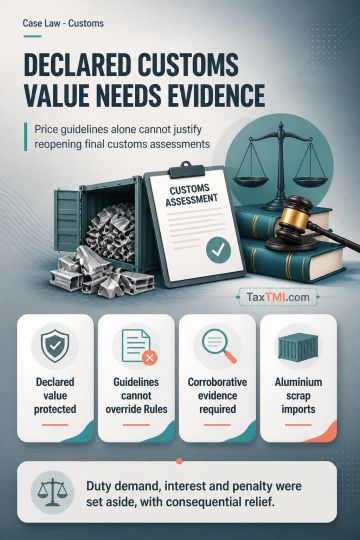
Transaction value cannot be rejected solely on non-statutory valuation guidelines without corroborative evidence supporting reassessment of final cust...
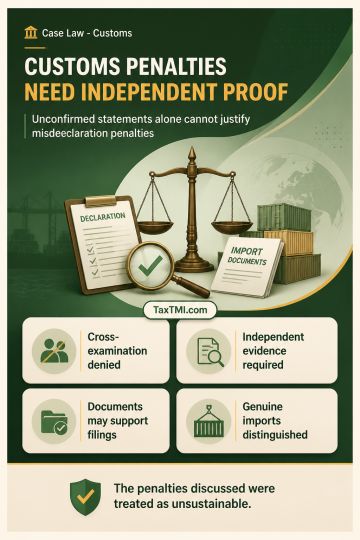
Cross-examination rights and corroborated evidence limit customs penalties for misdeclaration in genuine import transactions involving documented clea...
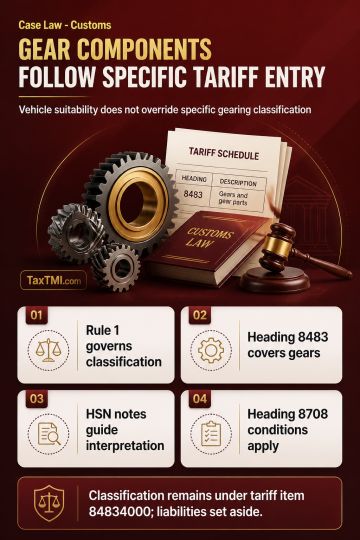
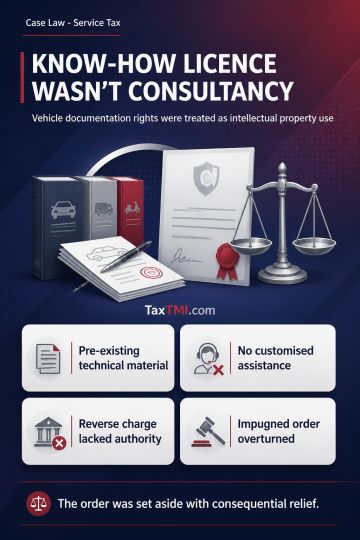
Tariff classification of vehicle gear components follows the specific gearing entry, displacing motor-vehicle parts classification and related liabili...
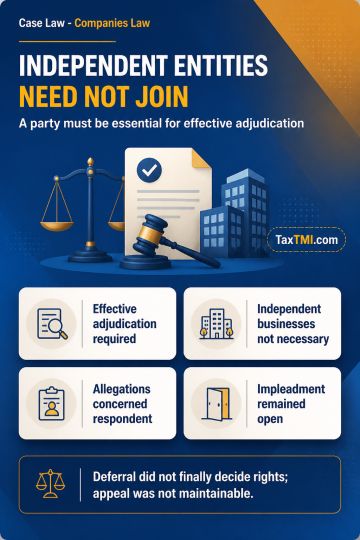
Necessary-party requirements limit impleadment of independent entities, while deferred consideration does not create an appealable adverse determinati...
Food supplement classification requires common parlance and authoritative tests, preventing treatment as proprietary Ayurvedic medicines without suppo...
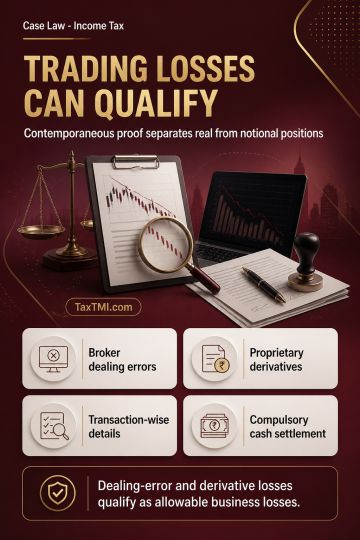
Business loss was disallowed on the premise that it was not genuine; applying s.28, the forum held that real revenue losses incidental to trade are deductible unless expressly barred, and found the disallowance conjectural and contrary to settled law, directing allowance of the loss in full. ESOP cross-charge was treated as notional; relying on prior year orders and the principle that "expenditure" under s.37 includes such employee compensation cost, the deduction for ESOP expense was allowed. Reimbursement of ESOP cost to the parent was held not to be consideration for services and made cost-to-cost; hence no TDS obligation arose under s.195 and the revenue's challenge failed. Manpower expenses were supported by contracts, invoices, statutory records and banking/TDS trail; later non-traceability of a vendor was insufficient absent evidence of cash-back, so the addition was deleted. - ITAT
Business loss was disallowed on the premise that it was not genuine; applying s.28, the forum held that real revenue losses incidental to trade are deductible unless expressly barred, and found the disallowance conjectural and contrary to settled law, directing allowance of the loss in full. ESOP cross-charge was treated as notional; relying on prior year orders and the principle that "expenditure" under s.37 includes such employee compensation cost, the deduction for ESOP expense was allowed. Reimbursement of ESOP cost to the parent was held not to be consideration for services and made cost-to-cost; hence no TDS obligation arose under s.195 and the revenue's challenge failed. Manpower expenses were supported by contracts, invoices, statutory records and banking/TDS trail; later non-traceability of a vendor was insufficient absent evidence of cash-back, so the addition was deleted. - ITAT
Note: It is a system-generated summary and is for quick reference only.
 TaxTMI
 of 4801







 Join Channel


 TaxTMI
