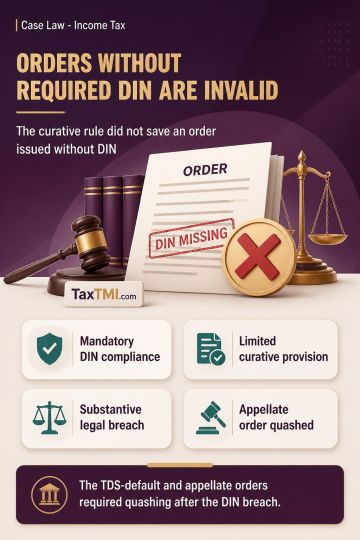
Document Identification Number compliance renders TDS-default orders invalid where mandatory DIN requirements are breached and curative provision does...
An assessee has statutory discretion to pursue either an appeal under s. 246A or revision under s. 264, and the revisional authority cannot refuse to exercise jurisdiction merely because the impugned order was appealable; consequently, rejection of revision on that ground was invalid and the matter was remitted for de novo consideration. The revisional power under s. 264 is wide and intended to prevent miscarriage of justice, extending to correction of mistakes or errors committed by the assessee in the return of income or audit report; accordingly, the authority was directed to consider such errors and grant relief if legally tenable after affording a hearing within a fixed timeframe - HC
An assessee has statutory discretion to pursue either an appeal under s. 246A or revision under s. 264, and the revisional authority cannot refuse to exercise jurisdiction merely because the impugned order was appealable; consequently, rejection of revision on that ground was invalid and the matter was remitted for de novo consideration. The revisional power under s. 264 is wide and intended to prevent miscarriage of justice, extending to correction of mistakes or errors committed by the assessee in the return of income or audit report; accordingly, the authority was directed to consider such errors and grant relief if legally tenable after affording a hearing within a fixed timeframe - HC
Note: It is a system-generated summary and is for quick reference only.
 TaxTMI
  TaxTMI
 of 4918