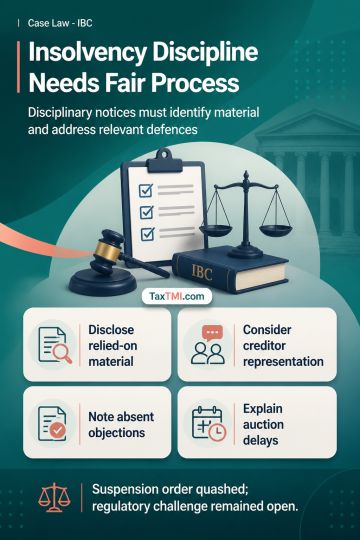
Natural justice in insolvency-professional discipline requires disclosed material; notices based on extraneous material and ignored defences are vitia...
Development rights transfers treated as immovable property, while construction abatement applies and repeated non-payment permits extended service-tax...
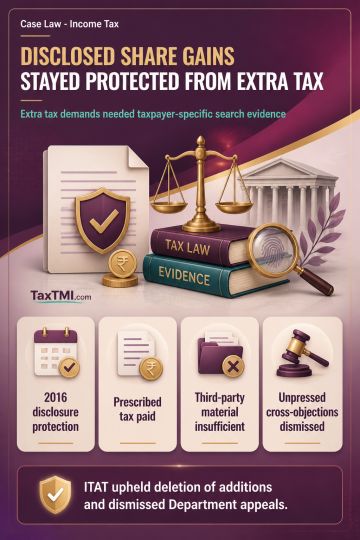
Income Disclosure Scheme immunity and search-material requirements barred further share-transaction additions in unabated assessments under section 15...
The dominant issue was whether the statutory appeal was filed within the limitation period prescribed under Section 128(1) of the Customs Act, 1962, and within the further condonable period available to the appellate authority. The tribunal held that the appellant admittedly became aware of the order on 16.08.2021, yet filed the appeal well beyond the maximum period that could be condoned, and the Commissioner (Appeals) therefore lacked jurisdiction to entertain it, consistent with the principle that delay beyond the statutorily condonable limit cannot be excused. Consequently, the appeal was dismissed as time-barred. - CESTAT
The dominant issue was whether the statutory appeal was filed within the limitation period prescribed under Section 128(1) of the Customs Act, 1962, and within the further condonable period available to the appellate authority. The tribunal held that the appellant admittedly became aware of the order on 16.08.2021, yet filed the appeal well beyond the maximum period that could be condoned, and the Commissioner (Appeals) therefore lacked jurisdiction to entertain it, consistent with the principle that delay beyond the statutorily condonable limit cannot be excused. Consequently, the appeal was dismissed as time-barred. - CESTAT
Note: It is a system-generated summary and is for quick reference only.
 TaxTMI
  TaxTMI
 of 4828








 Join Channel