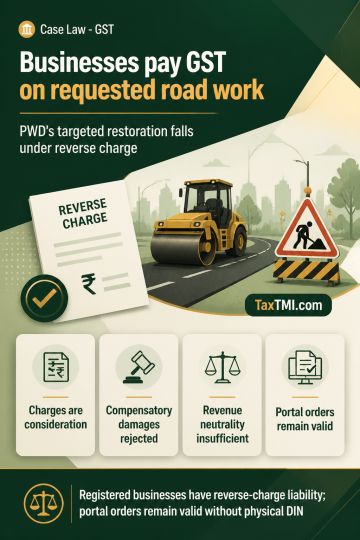
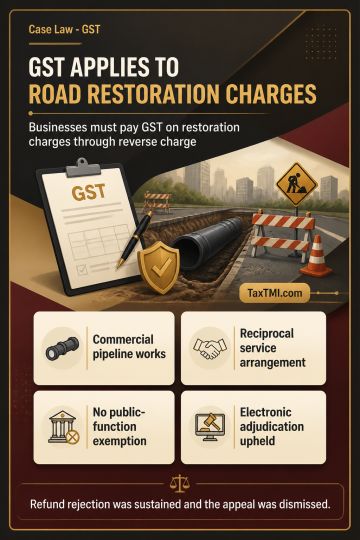
Request-driven road restoration attracts reverse-charge GST, not governmental-function treatment or compensatory-damages status for business recipient...
Road restoration charges for commercial pipeline works are taxable Government services, with reverse charge liability and no public-function exemption...
Model-wise import cap monitoring cannot justify withholding used multifunction machines where all-India tracking is absent and full security is furnis...
The dominant issue was whether refund of excess additional duty of customs could be rejected on the ground that it did not arise from a valid reassessment as required under Section 27 of the Customs Act, 1962 in light of ITC Ltd. The Tribunal held that self-assessment under Section 17, reassessment under Sections 17/128, and amendments/corrections under Sections 149/154 constitute "assessment" for Section 27 purposes, and that a speaking reassessment order had in fact been passed but was ignored by the appellate authority. Consequently, the rejection of the refund was legally unsustainable and was set aside, restoring entitlement to refund. - CESTAT
The dominant issue was whether refund of excess additional duty of customs could be rejected on the ground that it did not arise from a valid reassessment as required under Section 27 of the Customs Act, 1962 in light of ITC Ltd. The Tribunal held that self-assessment under Section 17, reassessment under Sections 17/128, and amendments/corrections under Sections 149/154 constitute "assessment" for Section 27 purposes, and that a speaking reassessment order had in fact been passed but was ignored by the appellate authority. Consequently, the rejection of the refund was legally unsustainable and was set aside, restoring entitlement to refund. - CESTAT
Note: It is a system-generated summary and is for quick reference only.
 TaxTMI
  TaxTMI
 of 4918