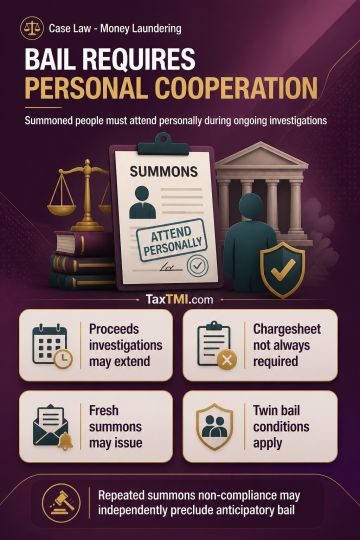
Money-laundering judgment timing requires awaiting the scheduled-offence decision despite continuation of the underlying trial where outcomes directly...
Accredited investor eligibility expands through securities-market exposure, while alternative investment fund disputes require prescribed resolution a...
Customs Assessment Portal centralises classification and valuation guidance to support consistent, transparent and informed compliance across stakehol...
Whether RBI's permission for allotment of shares to a non-resident against import of second-hand capital goods was legally infirm, including on an alleged FERA violation, was the dominant issue. The court held that the investment involved direct payment by the non-resident for imported machinery, with no foreign-exchange outflow by the company, and was expressly permissible on a non-repatriable basis under the applicable government directive; hence RBI's approval was valid. It further held that FERA had been repealed prior to the approval and, under FEMA, no RBI permission was required for such allotment; the "sunset" contention therefore did not arise. The intra-court appeal was dismissed - HC
Whether RBI's permission for allotment of shares to a non-resident against import of second-hand capital goods was legally infirm, including on an alleged FERA violation, was the dominant issue. The court held that the investment involved direct payment by the non-resident for imported machinery, with no foreign-exchange outflow by the company, and was expressly permissible on a non-repatriable basis under the applicable government directive; hence RBI's approval was valid. It further held that FERA had been repealed prior to the approval and, under FEMA, no RBI permission was required for such allotment; the "sunset" contention therefore did not arise. The intra-court appeal was dismissed - HC
Note: It is a system-generated summary and is for quick reference only.
 TaxTMI
  TaxTMI
 of 4920