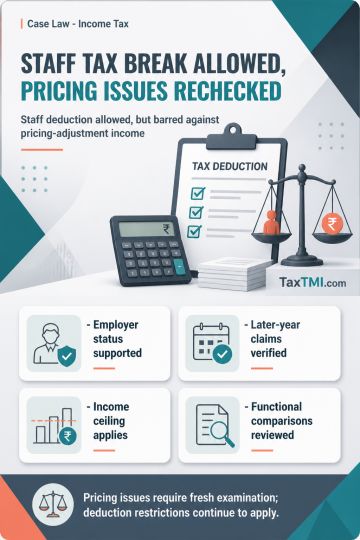
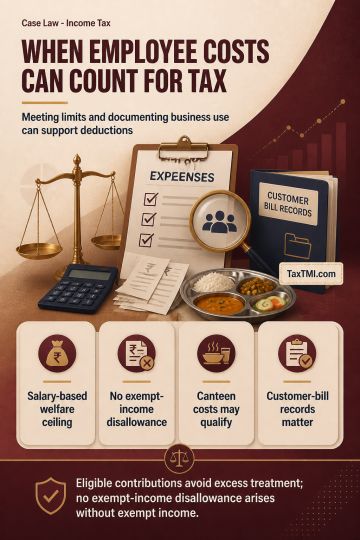
Section 80JJAA employee-cost deduction allowed for deployed staff but barred against transfer-pricing income enhancement, with pricing issues remanded...
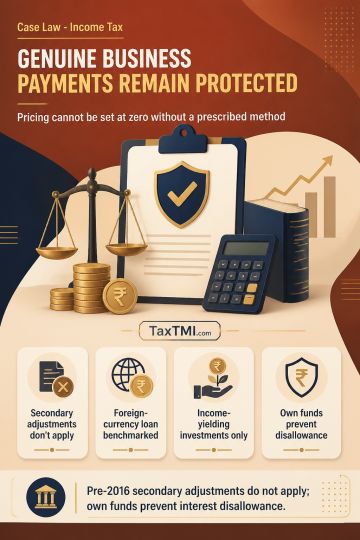
Transfer-pricing methodology protects commercially genuine associated-enterprise payments, while pre-2016 secondary adjustments and related notional i...
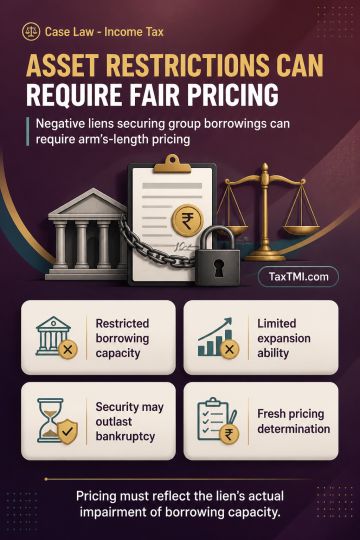
Negative liens over operating assets can constitute international transactions requiring arm's-length pricing reflecting restricted borrowing and expa...
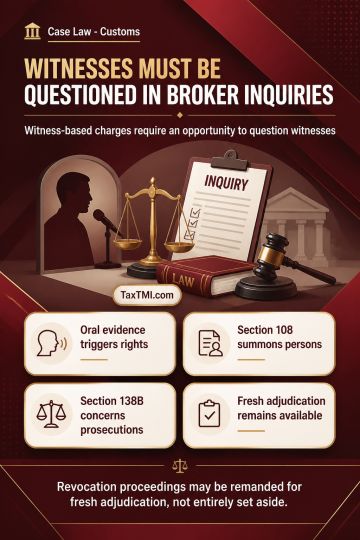
Cross-examination rights in Customs Broker revocation inquiries require witness examination; procedural denial may be cured through fresh adjudication...
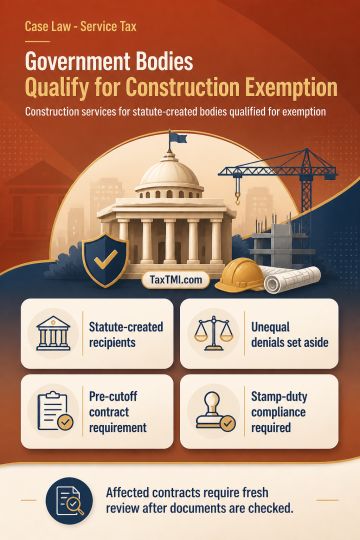
Governmental authority status supports construction-service exemption, while pre-cutoff contract and stamp-duty compliance requires verification on re...
Page of 4826
Press 'Enter' after typing page number.
81 to 100 of 96510 Results
❮
❯
❯❯
0 / 200
Expand Note
Add to Folder
No Folders have been created
+
Are you sure you want to delete "My most important" ?
The dominant issue was whether a director without shareholding or express company authorization had locus standi to sue for injunctions restraining others from exercising shareholder/director rights and to effectively litigate alleged corporate wrongs. The court held that a company is a distinct legal entity and any action for wrongs to the company must be instituted by the company itself or by a duly authorized person; the plaintiff's only privity was a loan agreement already repaid and no relief was founded on it. As the suit impermissibly sought interference in internal corporate governance without authorization, the plaint disclosed no cause of action and was liable to rejection under Order VII Rule 11(a) CPC; the suit was dismissed. - HC
The dominant issue was whether a director without shareholding or express company authorization had locus standi to sue for injunctions restraining others from exercising shareholder/director rights and to effectively litigate alleged corporate wrongs. The court held that a company is a distinct legal entity and any action for wrongs to the company must be instituted by the company itself or by a duly authorized person; the plaintiff's only privity was a loan agreement already repaid and no relief was founded on it. As the suit impermissibly sought interference in internal corporate governance without authorization, the plaint disclosed no cause of action and was liable to rejection under Order VII Rule 11(a) CPC; the suit was dismissed. - HC
Note: It is a system-generated summary and is for quick reference only.
 TaxTMI
  TaxTMI
 of 4826







 Join Channel


