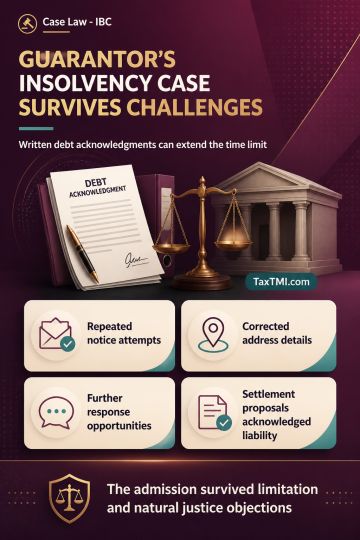
Service of notice and contractual debt acknowledgment preserved insolvency admission against a corporate guarantor despite limitation and natural just...
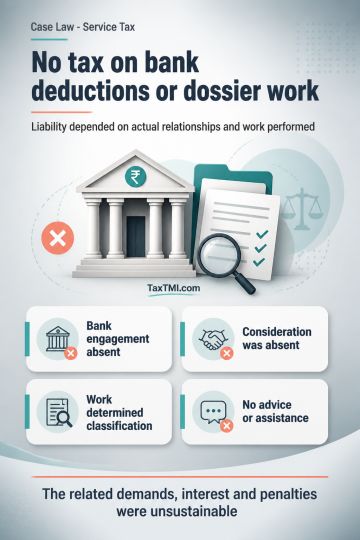
Original works exemption excludes standalone boulder transportation, leaving subcontracted railway-project transport services subject to service tax l...
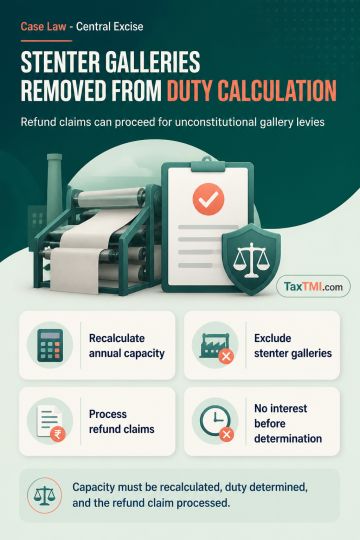
Annual production capacity determinations excluding stenter galleries support refunds for unconstitutional excise levies without an unjust-enrichment ...
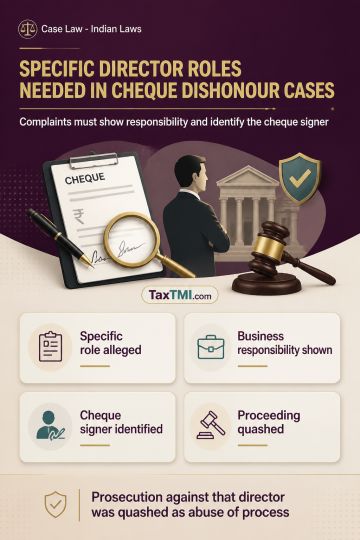
Vicarious liability for cheque dishonour requires specific allegations of responsibility and cheque signatory; generic director allegations cannot sus...
IT Resilience Index requires market infrastructure institutions to automate resilience scoring, early warnings, and continuous service-delivery monito...
The dominant issue was whether part of the cause of action arose within the territorial jurisdiction of the Court to entertain a writ challenging anti-dumping final findings on grounds of violation of natural justice and arbitrariness. Applying the test that only facts having a direct nexus with the lis constitute cause of action, the Court held that alleged adverse business impact or commercial engagements within the State were not integral to establishing the asserted infringement of fair procedure under Article 14, and the challenge would survive even if those averments were removed. Consequently, no part of the cause of action arose within its territory, and the writ was not maintainable; the petition was dismissed without examining merits or alternative remedy. - HC
The dominant issue was whether part of the cause of action arose within the territorial jurisdiction of the Court to entertain a writ challenging anti-dumping final findings on grounds of violation of natural justice and arbitrariness. Applying the test that only facts having a direct nexus with the lis constitute cause of action, the Court held that alleged adverse business impact or commercial engagements within the State were not integral to establishing the asserted infringement of fair procedure under Article 14, and the challenge would survive even if those averments were removed. Consequently, no part of the cause of action arose within its territory, and the writ was not maintainable; the petition was dismissed without examining merits or alternative remedy. - HC
Note: It is a system-generated summary and is for quick reference only.
 TaxTMI
  TaxTMI
 of 4828











 Join Channel