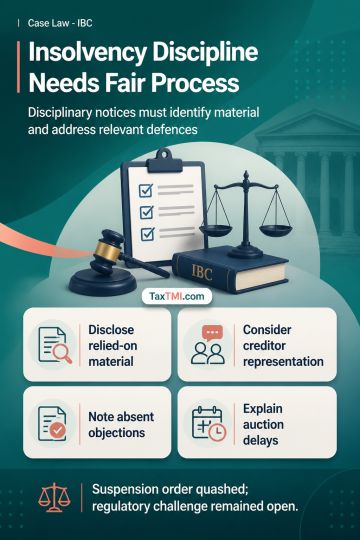
Natural justice in insolvency-professional discipline requires disclosed material; notices based on extraneous material and ignored defences are vitia...
Development rights transfers treated as immovable property, while construction abatement applies and repeated non-payment permits extended service-tax...
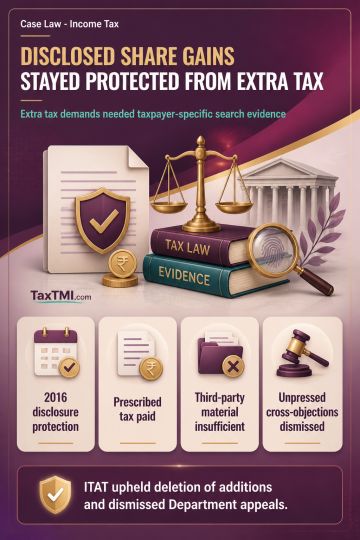
Income Disclosure Scheme immunity and search-material requirements barred further share-transaction additions in unabated assessments under section 15...
Writ jurisdiction against a penalty order under Section 129(1)(b) of the GST law was declined on the ground of efficacious alternative remedy under Section 107, since there was no breach of natural justice, no lack of jurisdiction, no vires challenge, and no established infringement of fundamental rights. The impugned order contained detailed factual findings, including doubts about the genuineness of documents and e-way bills, which required appellate fact-finding and could not be adjudicated on affidavits in writ proceedings; consequently, reliance on the 31 December 2018 circular to claim benefit under Section 129(1)(a) was not accepted. The taxpayer was relegated to statutory appeal, with directions to enable e-filing access. - HC
Writ jurisdiction against a penalty order under Section 129(1)(b) of the GST law was declined on the ground of efficacious alternative remedy under Section 107, since there was no breach of natural justice, no lack of jurisdiction, no vires challenge, and no established infringement of fundamental rights. The impugned order contained detailed factual findings, including doubts about the genuineness of documents and e-way bills, which required appellate fact-finding and could not be adjudicated on affidavits in writ proceedings; consequently, reliance on the 31 December 2018 circular to claim benefit under Section 129(1)(a) was not accepted. The taxpayer was relegated to statutory appeal, with directions to enable e-filing access. - HC
Note: It is a system-generated summary and is for quick reference only.
 TaxTMI
  TaxTMI
 of 4828








 Join Channel