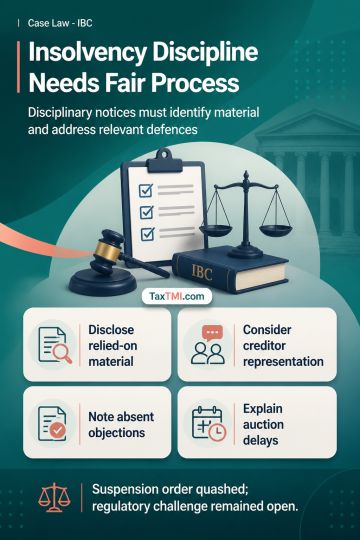
Natural justice in insolvency-professional discipline requires disclosed material; notices based on extraneous material and ignored defences are vitia...
Development rights transfers treated as immovable property, while construction abatement applies and repeated non-payment permits extended service-tax...
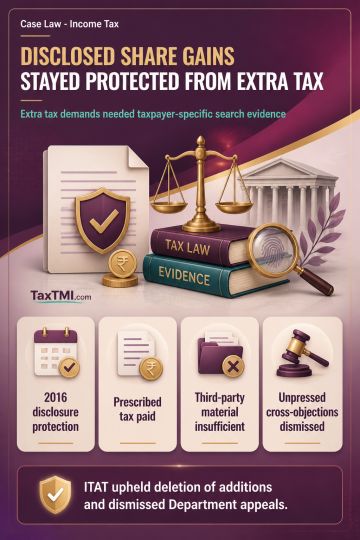
Income Disclosure Scheme immunity and search-material requirements barred further share-transaction additions in unabated assessments under section 15...
The dominant issue was whether advances/deposits written off under "administrative expenses" pursuant to a settlement with an associated party were allowable as revenue deduction under s.37(1) or as business loss under s.28, or were in substance capital outlay for acquisition of an MRI machine. The appellate authority had allowed the claim without examining whether any expenditure or business loss actually arose in the course of business, whether the assessee was in the business of advancing loans, whether there was any attempt to procure the alleged capital asset, and whether the timing and substance of successive agreements supported a genuine business transaction; it also relied on inapplicable precedents and did not consider the binding decision cited by the Revenue. The matter was remanded for fresh adjudication, and the Revenue's appeal was allowed for statistical purposes. - ITAT
The dominant issue was whether advances/deposits written off under "administrative expenses" pursuant to a settlement with an associated party were allowable as revenue deduction under s.37(1) or as business loss under s.28, or were in substance capital outlay for acquisition of an MRI machine. The appellate authority had allowed the claim without examining whether any expenditure or business loss actually arose in the course of business, whether the assessee was in the business of advancing loans, whether there was any attempt to procure the alleged capital asset, and whether the timing and substance of successive agreements supported a genuine business transaction; it also relied on inapplicable precedents and did not consider the binding decision cited by the Revenue. The matter was remanded for fresh adjudication, and the Revenue's appeal was allowed for statistical purposes. - ITAT
Note: It is a system-generated summary and is for quick reference only.
 TaxTMI
  TaxTMI
 of 4828











 Join Channel